
-
 Continue reading →: The Hawthorne Effect: Does Attention Change the Way Your Team Works?
What happens when people know someone is watching them? Do they work harder because their working conditions have improved? Do they become more engaged because management suddenly seems interested in them? Or do they simply change their behaviour because they know they are being observed? This question has fascinated researchers,…
-
 Continue reading →: Survivorship Bias: Why Studying Successful People Can Make You Worse at Making Decisions
We love success stories. The entrepreneur who started with almost nothing and built a billion dollar company. The investor who made the right decision at exactly the right moment. The athlete who trained harder than everyone else. The CEO who ignored conventional wisdom and transformed a struggling company. Their stories…
-
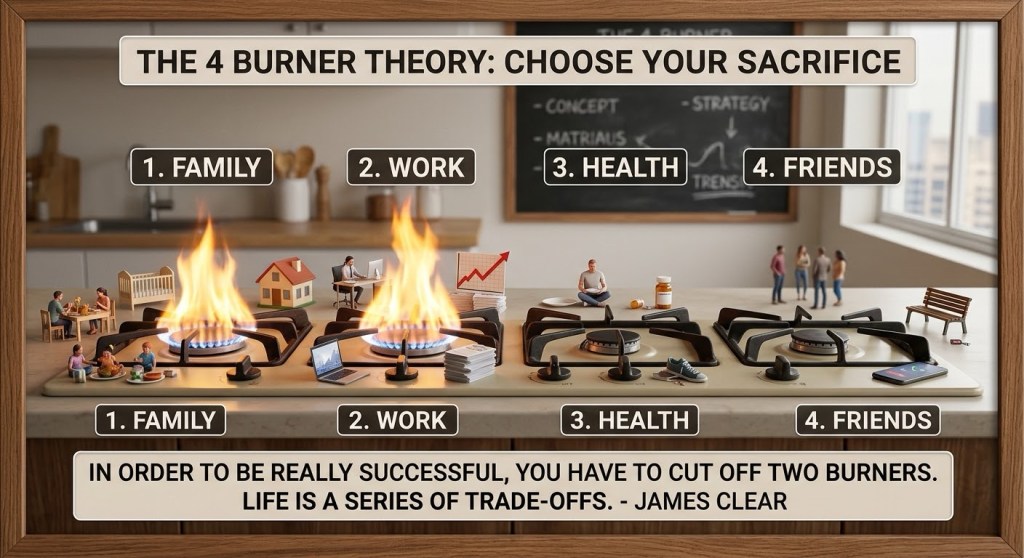 Continue reading →: The 4 Burner Theory: Why You Cannot Have Everything at Once
What if the biggest problem with modern life is not that we have too little time, but that we expect too much from the time we have? We want a successful career, a healthy body, a strong relationship, close friends, time with our families, enough sleep, interesting hobbies and perhaps…
-
 Continue reading →: 12 Wake Up Calls Every Leader Needs to Hear
Leadership is often described in positive terms. Vision. Influence. Strategy. Communication. Motivation. Growth. We read books about great leaders, study successful CEOs and collect frameworks that promise to make us better at leading people. But there is another side of leadership that is much less comfortable. Sometimes leadership is not…
-
 Continue reading →: The Red Car Theory: Why You See More of What You Focus On
Have you ever decided that you want to buy a red car, and suddenly red cars seem to be everywhere? You drive to work and notice three. You see one outside a restaurant. Another passes you at a traffic light. Later that evening, you notice another one parked around the…
-
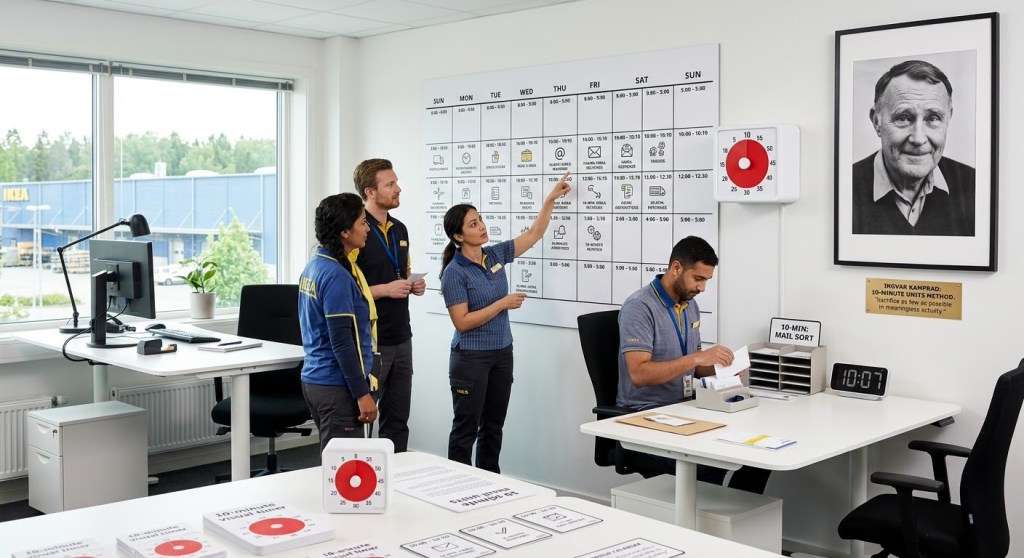 Continue reading →: The Kamprad 10 Minute Method: What Can You Really Do in 10 Minutes?
Ten minutes does not sound like much. You can make coffee. Scroll through your phone. Check a few emails. Watch half a YouTube video. Wait for someone who is running late. Or you can change the direction of your day. That was the idea behind one of the simplest productivity…
-
 Continue reading →: Leadership in the Age of AI: Why Good Leaders Matter More Than Ever
Artificial intelligence can write reports, analyze data, create presentations, summarize meetings and answer questions in seconds. Employees can now access knowledge that once required years of experience or a team of specialists. Work is no longer tied to a single office, and a team can include someone who started their…
-
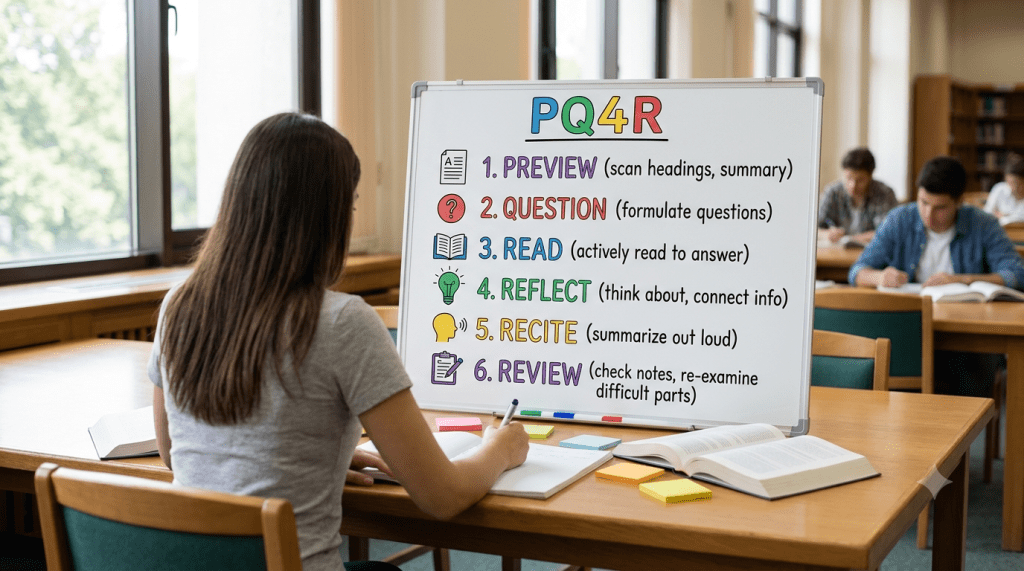 Continue reading →: The PQ4R Method: Turn Reading into Knowledge That Lasts
Have you ever finished an entire chapter, closed the book, and wondered where all the information went? You spent the time. You read every page. You even highlighted the important parts. Yet only a few days later, most of it has disappeared. This is one of the biggest frustrations for…
-
 Continue reading →: The 3Q3R Method: Read Less, Understand More
Have you ever reached the end of a chapter and realized you cannot remember what you just read? Most people have experienced this. Your eyes move across every page, you spend time reading, and it feels like you are making progress. But when someone asks you to explain the topic,…
-
 Continue reading →: The KWL Method: Learn with Purpose Instead of Just Collecting Information
Have you ever finished reading a book, watching a training video, or attending a class and thought, “I learned something… but I cannot really remember what it was”? This happens more often than people realize. We spend hours reading articles, watching tutorials, listening to podcasts, and attending meetings. We consume…
This is Roya Bloom!
Your Day, Your Way, Our Planner

Questions, suggestions, or just want to say hello? We’d love to hear from you! Reach out to us using the information below, and our team will get back to you as soon as possible. Let’s make things happen together!
Let’s connect
Join the fun!
Stay updated with our latest productivity hacks by joining our newsletter.
