You read an article and feel a quiet sense of relief. Finally someone says what you already believed. You close the tab feeling smarter and more certain. What you do not notice is what you did not read.
This is confirmation bias at work.
As a psychologist, I see this bias everywhere. It is one of the strongest forces shaping how we think, decide, and judge others. Confirmation bias is the tendency to search for, notice, and trust information that supports our existing beliefs while ignoring or downplaying information that challenges them. It feels comfortable. It feels safe. And it often leads us in the wrong direction.
What confirmation bias really is
Your brain is built to be efficient, not objective. When you hold a belief, your mind starts acting like a filter. Information that agrees with you passes through easily. Information that disagrees feels uncomfortable, slow, or even threatening.
Research by Peter Wason showed this effect clearly. In his famous experiments, people tested ideas in a way that only confirmed what they already believed instead of trying to disprove it. Even when evidence was weak, the brain preferred agreement over accuracy.
This is not a flaw of intelligence. Highly educated people experience confirmation bias as much as anyone else. Sometimes even more, because they are better at defending their beliefs.
How confirmation bias shows up at work
In professional life, confirmation bias quietly shapes decisions every day.
In meetings, we listen more closely to colleagues who agree with us. We interrupt or dismiss those who challenge our idea. In home office settings, this effect can grow stronger. We read articles, newsletters, and posts that match our thinking and rarely question them.
Managers may favor employees who confirm their leadership style and overlook warning signs from others. Teams may repeat the same strategy because past success confirms their belief that it will work again, even when the context has changed.
Confirmation bias can slow learning, reduce innovation, and create blind spots that only become visible when a project fails.
Studying and learning under confirmation bias
Students often believe they understand a topic because they read material that feels familiar. They re read notes instead of testing themselves. They avoid difficult questions because those questions threaten their sense of progress.
Studies on learning show that active recall and testing expose gaps in knowledge. Confirmation bias does the opposite. It protects the illusion of understanding.
If you only study what feels easy, you may feel confident but perform poorly. The brain prefers comfort over challenge, even when challenge leads to growth.
Everyday life and relationships
Confirmation bias also shapes how we see people.
If you believe someone is unreliable, you will notice every delay and ignore moments of reliability. If you believe you are bad at math, you will remember every mistake and forget every success.
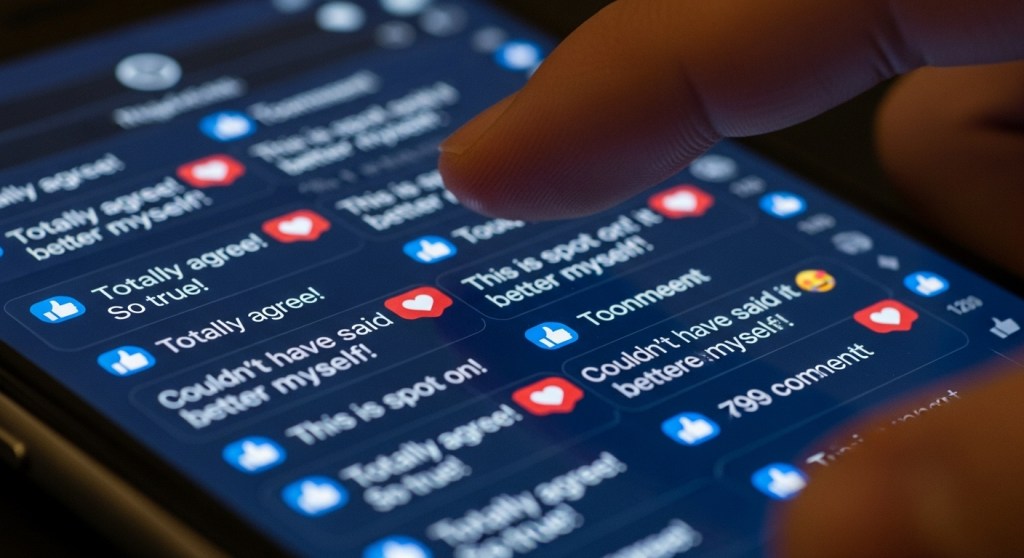
Social media strengthens this effect. Algorithms show you content that matches your views. Over time, your world feels more certain and more divided. Other perspectives start to look wrong instead of different.
This can affect relationships, self esteem, and emotional balance. When beliefs harden, curiosity fades.
Why the brain does this
From a psychological view, confirmation bias protects identity. Beliefs are not just ideas. They are tied to who we think we are. Challenging a belief can feel like a personal attack.
The brain also wants to save energy. Questioning yourself takes effort. Agreement is fast and rewarding. Dopamine responds to being right more than being accurate.
This made sense for survival. It does not always serve us well in complex modern life.
How to work with confirmation bias instead of fighting it
You cannot remove confirmation bias completely. But you can reduce its impact.
Ask better questions. Instead of asking Is this true ask What would prove this wrong.
Actively seek opposing views. Read one credible source that disagrees with you. Do not argue with it. Try to understand it.
In work settings, invite disagreement. Make it safe for others to challenge ideas. Diverse thinking improves decisions.
When studying, test yourself before reviewing notes. Confusion is a signal for learning, not failure.
In daily life, notice emotional reactions. Strong emotional resistance often points to a belief worth examining.
Why this matters
Better decisions do not come from stronger opinions. They come from better thinking.
Confirmation bias narrows our view of reality. Awareness widens it. When you learn to notice this bias, you gain flexibility, humility, and clarity. These skills matter in work, learning, and personal growth.
This article is part of the series Decision Making and Cognitive Biases. In the upcoming articles, we will explore other mental shortcuts like the Endowment Effect, Mere Exposure Effect, Priming, and Framing. Each of them shapes your choices more than you might expect.
The goal is not to think less. The goal is to think better.
Explore the full series: How Decision Making Really Works







Leave a comment