
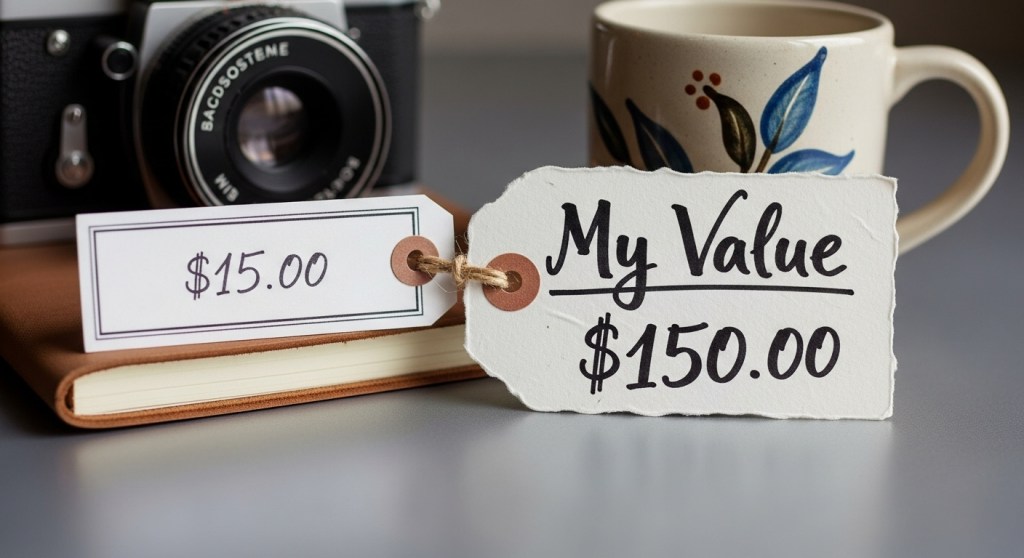
You hesitate before letting something go. A document you wrote months ago. A process your team has always used. An old idea that once worked well. Deep down you know it is no longer the best option. Still, giving it up feels harder than it should.
This is the endowment effect.
As a psychologist, I often explain the endowment effect as our tendency to overvalue things simply because we own them. Ownership creates emotional attachment. Once something feels like mine, the brain assigns it more value than it objectively deserves.
What the endowment effect really is
The endowment effect was first described by behavioral economist Richard Thaler. In classic experiments, people demanded much more money to give up an object they owned than they were willing to pay to acquire the same object. Nothing about the object changed. Only ownership did.
From a psychological view, this effect is closely linked to loss aversion. Losing something feels more painful than gaining something of equal value feels good. When we own something, giving it up feels like a loss. The brain reacts strongly to that feeling.
This happens automatically. You do not choose to value your things more. Your brain does it for you.
How it shows up in professional life
At work, the endowment effect often hides behind loyalty and experience.
We defend our own ideas more strongly than new ones. We prefer tools we already use, even when better options exist. Teams resist change not because the new way is bad, but because the old way feels safe and familiar.
In home office settings, this bias can grow stronger. Personal workflows, note systems, or schedules start to feel like part of identity. Changing them feels uncomfortable, even when productivity suffers.
Managers may also overvalue employees, projects, or strategies they personally chose. This can slow improvement and reduce honest evaluation.
Studying and learning under the endowment effect
Students often stick to study methods they already use, even when results are weak. Notes that took time to create feel valuable, so they keep rereading them instead of trying more effective techniques like retrieval practice.
The effort invested creates attachment. The brain confuses effort with value.
This can lead to inefficient learning, false confidence, and frustration when outcomes do not match expectations.
Everyday life decisions
The endowment effect influences daily choices more than we realize.
We keep unused subscriptions because they are already ours. We avoid decluttering because items feel meaningful once owned. We hesitate to change routines because they feel familiar.
Even opinions can be affected. Once we identify with a belief, we treat it like property. Letting go feels like losing part of ourselves.
Why the brain does this
From a psychological perspective, ownership signals safety. What we have helped us before. The brain assumes it will help again.
There is also an identity link. What we own often reflects who we think we are. Tools, roles, habits, and ideas become part of self image. Giving them up creates uncertainty.
The brain prefers certainty, even if it is not optimal.
How to reduce the endowment effect
You cannot eliminate this bias, but you can create distance from it.
Ask yourself a simple question. If I did not own this, would I choose it today.
In work situations, separate ideas from identity. An idea can be replaced without reducing your value.
When studying, evaluate methods by results, not effort invested.
In daily life, practice small letting go moments. Decluttering one item or changing one routine trains flexibility.
Feedback also helps. External perspectives are less affected by ownership and often see value more clearly.
Why this matters
The endowment effect keeps us attached to the past. Awareness opens the door to better choices.
Progress often requires letting go. Of old tools, old habits, old ideas. When you understand why your brain resists this, change becomes easier and less emotional.
This article is part of the series Decision Making and Cognitive Biases. In the upcoming articles, we will explore the Mere Exposure Effect, Priming, and Framing, and how these mental shortcuts shape your decisions without you noticing.
Better decisions begin when value is judged by impact, not ownership.
Explore the full series: How Decision Making Really Works








Leave a comment