

You try to avoid mistakes. You double check your work. You wait until everything feels perfect. Yet progress is slow. Sometimes it stops completely.
Then you see someone else moving forward faster. They make mistakes. They adjust. They improve.
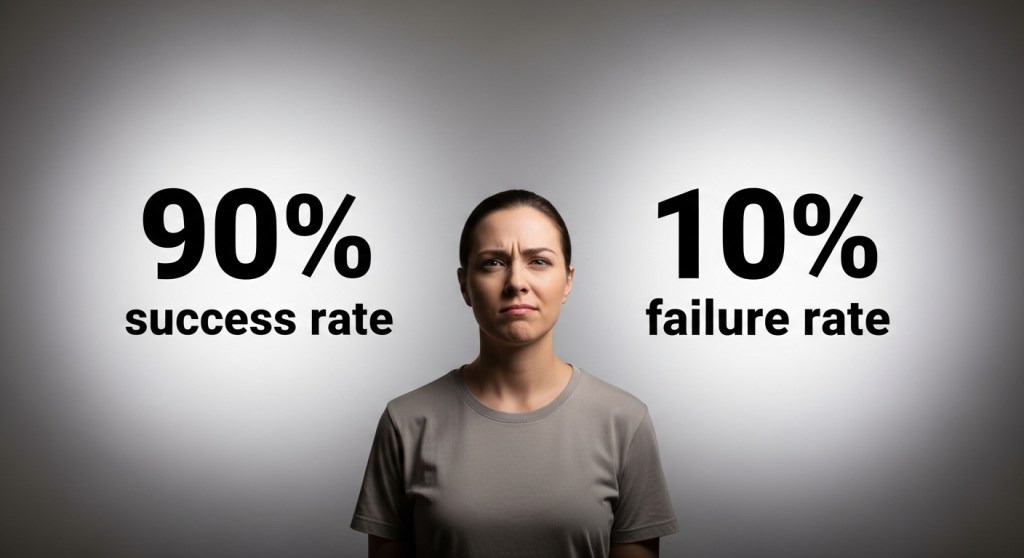
This is the failure paradox.
The more you try to avoid failure, the more you limit success. And the more you accept failure, the more progress you make.
What is the failure paradox
The failure paradox describes a simple but powerful idea. Failure is not the opposite of success. It is part of it.
Many people believe success comes from getting things right the first time. In reality, success comes from trying, failing, learning, and adjusting.
When you avoid failure, you also avoid learning. When you allow failure, you create feedback.
Why we fear failure
Failure feels uncomfortable. It can trigger fear of judgment, loss of confidence, or even self doubt.
The brain sees failure as a threat. It tries to protect you by avoiding situations where failure is possible.
This is why people delay starting, over prepare, or choose only safe tasks.
The problem is clear. Safety limits growth.
Failure in professional life
At work, the failure paradox appears in many ways.
You delay sharing ideas because they are not perfect. You avoid new challenges because you might fail. You spend too much time planning and not enough time acting.
In home office, this becomes stronger. Without quick feedback from others, fear can grow quietly. You may overthink decisions and avoid taking action.
But progress at work depends on iteration. The faster you learn, the faster you improve.
Failure in studying
Students often try to avoid mistakes.
They reread notes instead of testing themselves. They wait until they feel ready before practicing. They avoid difficult topics.
This creates the illusion of learning, but not real understanding.
Real learning happens when you try, get it wrong, and correct it. Mistakes show where the gaps are.
Without failure, there is no clear direction for improvement.
Failure in daily life
In everyday life, the failure paradox affects habits and goals.
You want to start exercising but fear not being consistent. You want to change your routine but worry about doing it wrong.
So you wait. And nothing changes.
Trying and failing would already be progress. Not trying keeps you in the same place.
Why failure leads to growth
Failure provides feedback. It shows what works and what does not.
The brain learns through correction. Each mistake updates your understanding.
Without this process, improvement stays theoretical.
There is also a psychological shift. When you accept failure, pressure decreases. Action becomes easier. You focus on progress instead of perfection.
How to use the failure paradox
Start by changing how you define failure.
Failure is not a final result. It is information.
Set goals based on action, not outcome. For example, instead of saying I must succeed, say I will try ten times.
Create small experiments. Test ideas quickly. Learn from the result. Adjust and repeat.
In work, share ideas earlier. Feedback reduces uncertainty.
In studying, use active recall and practice. Let mistakes guide your learning.
In daily life, allow yourself to start imperfectly. Progress comes from movement, not from waiting.
A simple example
If you want to improve a skill, do not aim for perfect performance.
Aim for repetition. Each attempt teaches you something new.
Over time, small corrections lead to big improvement.
Why this matters
The failure paradox changes how you approach growth.
When you stop avoiding failure, you remove a major barrier. You act more. You learn faster. You improve continuously.
Success is not built on perfect steps. It is built on many imperfect ones.
Understanding this makes progress less stressful and more realistic.
Sometimes the fastest way forward is to allow yourself to fail.






Leave a comment