
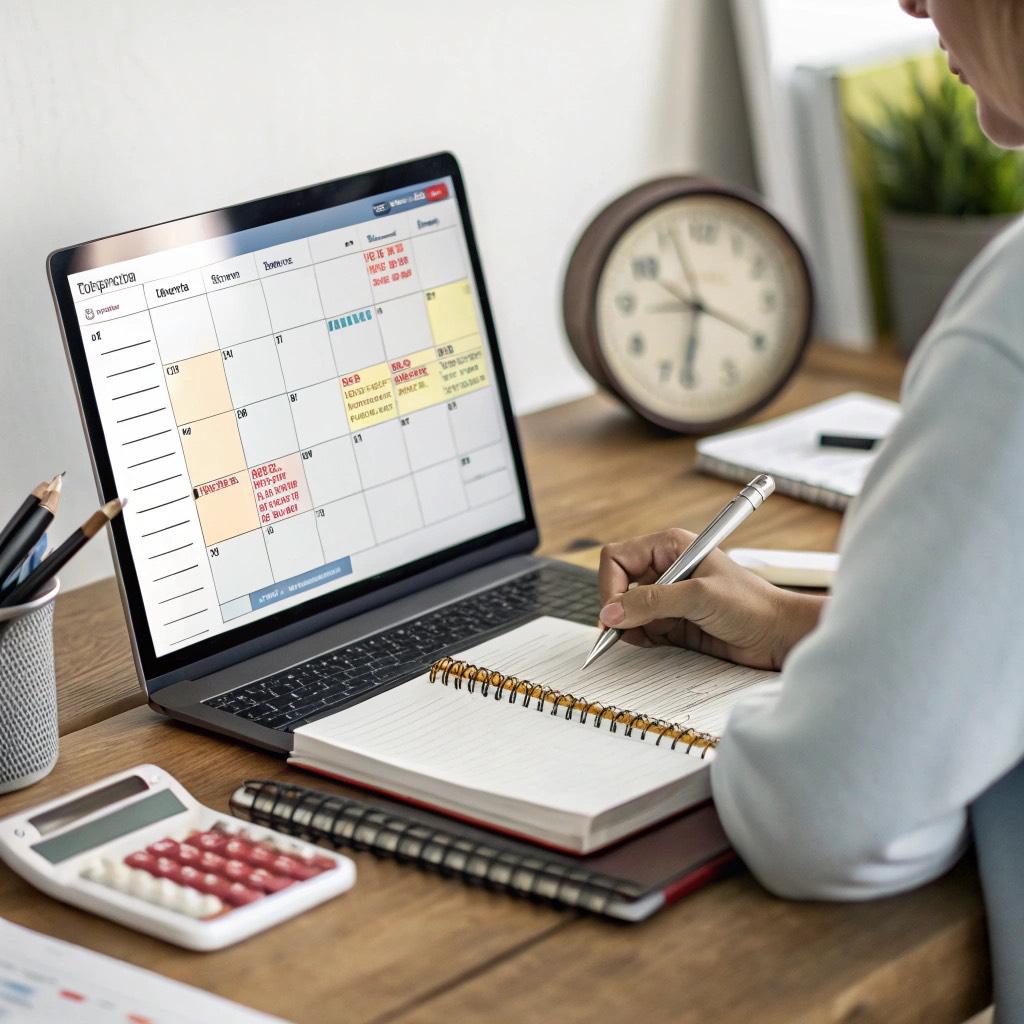
Ever spent hours on a task that should’ve taken 30 minutes? You’re not alone. Work expands to fill the time you give it. This is known as Parkinson’s Law, and it’s one of the biggest reasons we lose productivity. The solution? Timeboxing.
Timeboxing is a simple but powerful technique that forces you to set a fixed amount of time for a task—and stick to it. Instead of working until something feels “done” (which often leads to overthinking and perfectionism), you work within a pre-set time limit, boosting focus and efficiency.
How Timeboxing Works
Instead of creating a to-do list with vague time estimates, you schedule specific time slots for each task.
These time slots, or “timeboxes,” help you:
✔ Stay focused—You work with urgency, knowing the clock is ticking.
✔ Avoid overworking—You don’t spend unnecessary time perfecting small details.
✔ Prioritize effectively—You dedicate time to what truly matters.
For example, rather than saying, “I’ll work on the presentation today,” you set a 90-minute timebox from 10:00–11:30 AM to complete the draft. Once the time is up, you stop and move on.
Applying Timeboxing to Meetings
Meetings are notorious for running too long and wasting time. By applying Timeboxing, you can keep discussions focused and ensure every minute is used effectively.
1. Set Time Limits for Each Agenda Item
Instead of letting one topic dominate the entire meeting, assign strict timeboxes:
- Project update – 10 minutes
- Brainstorming – 20 minutes
- Decision-making – 15 minutes
This prevents endless discussions and forces teams to get to the point.
2. Use a Countdown Timer
A visible timer keeps everyone aware of the time limit. When people know they only have 10 minutes to discuss a topic, they stay focused and concise.
3. Stick to the Timebox—No Extensions
If time runs out, don’t extend the discussion—decide whether to move forward or schedule a follow-up. The key to Timeboxing is respecting the limits you set.
4. Reserve the Last 5 Minutes for Action Items
Avoid vague conclusions. Set aside the final 5 minutes to summarize key decisions and assign next steps with clear deadlines.
Why Timeboxing Works
🔹 Reduces procrastination—A ticking clock pushes you to start.
🔹 Prevents meetings from dragging on—Discussions stay structured.
🔹 Improves focus—You block distractions and commit to deep work.
🔹 Creates a sense of urgency—Tasks don’t expand beyond what’s necessary.
Try It Today
Pick a task, set a strict timebox, and commit to finishing within that limit. Whether it’s a report, a brainstorming session, or a team meeting, you’ll be amazed at how much more you accomplish—in less time.








Leave a comment