

Burnout is a state of chronic physical and emotional exhaustion often resulting from prolonged stress and overwork. It is a growing concern in today’s fast-paced world, affecting individuals across various professions and walks of life. Understanding the stages of burnout can help in recognizing the signs early and taking steps to prevent it. Dr. Herbert Freudenberger, a psychologist who first identified and researched burnout in the 1970s, outlined 12 distinct phases of burnout. This blog will explore these phases in detail, offering insights into how burnout develops and how to address it.
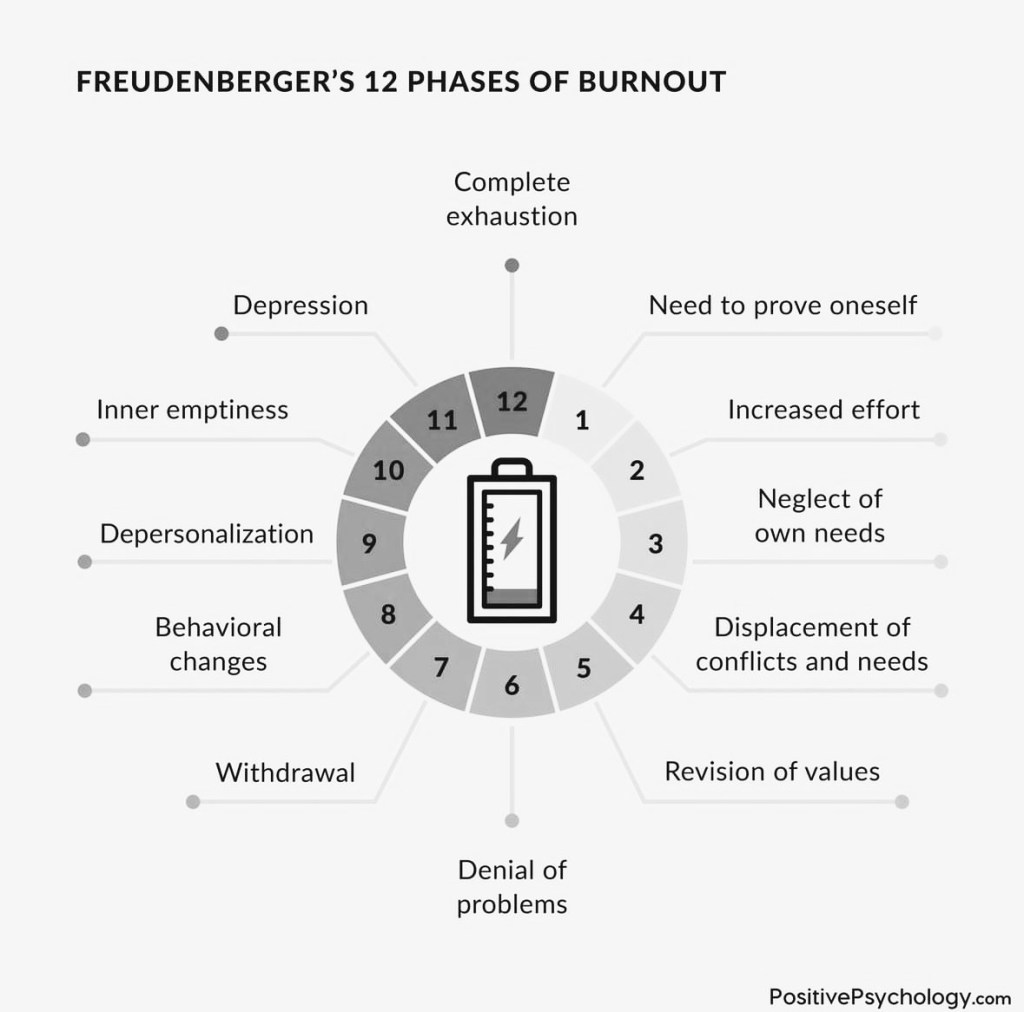
Image/illustration by positive psychology, Amsterdam via positivepsychology.com.
Phase 1: The Compulsion to Prove Oneself
The journey to burnout often begins with an excessive drive to prove oneself. Individuals in this phase are highly ambitious and feel the need to demonstrate their worth and capability. They take on heavy workloads, often at the expense of their personal life and well-being.
Tip: Balance ambition with self-care. Set realistic goals and prioritize time for rest and relaxation.
Phase 2: Working Harder
As the compulsion to prove oneself grows, individuals start working harder. They take on more responsibilities and push themselves beyond their limits, often neglecting their personal needs.
Tip: Delegate tasks and seek support from colleagues or loved ones. Recognize the importance of teamwork and shared responsibilities.
Phase 3: Neglecting Personal Needs
In this phase, personal needs such as sleep, nutrition, and leisure activities are neglected. The individual prioritizes work over everything else, leading to a decline in physical and emotional well-being.
Tip: Schedule regular breaks and maintain a healthy work-life balance. Ensure you are eating well, exercising, and getting enough sleep.
Phase 4: Displacement of Conflicts
Rather than addressing the growing stress and conflict, individuals may start to displace their frustrations onto others. They may become irritable, impatient, and less tolerant.
Tip: Practice stress management techniques such as mindfulness, meditation, or counseling. Open up about your struggles to trusted friends or professionals.
Phase 5: Revision of Values
As burnout progresses, individuals may begin to revise their values. Work becomes their central focus, and other aspects of life, such as hobbies and relationships, are devalued and neglected.
Tip: Reevaluate your priorities and ensure that work is not the sole focus of your life. Engage in activities that bring joy and fulfillment outside of work.
Phase 6: Denial of Emerging Problems
In this phase, individuals may deny that their behaviors are problematic. They might become cynical, sarcastic, and intolerant, often blaming others for their issues.
Tip: Accept responsibility for your actions and recognize when stress is affecting your behavior. Seek feedback from trusted colleagues or mentors.
Phase 7: Withdrawal
Withdrawal from social interactions is common in this phase. Individuals may isolate themselves from friends, family, and colleagues, further exacerbating their sense of loneliness and stress.
Tip: Stay connected with your social support network. Make time for meaningful interactions with loved ones and seek help if needed.
Phase 8: Odd Behavioral Changes
Significant behavioral changes become evident. Individuals might experience mood swings, anger outbursts, or erratic behavior. Their performance at work may start to decline.
Tip: Monitor your behavior and seek professional help if you notice significant changes. Therapy or counseling can provide support and strategies for managing stress.
Phase 9: Depersonalization
Depersonalization involves feeling detached from oneself and others. Individuals may feel numb, disconnected, and lose their sense of purpose.
Tip: Engage in self-reflection and mindfulness practices to reconnect with your emotions and values. Consider talking to a mental health professional.
Phase 10: Inner Emptiness
A profound sense of inner emptiness and hopelessness characterizes this phase. Individuals may turn to unhealthy coping mechanisms such as overeating, substance abuse, or risky behaviors.
Tip: Seek healthy coping strategies such as physical activity, creative outlets, or relaxation techniques. Professional support can be crucial in addressing underlying issues.
Phase 11: Depression
As burnout intensifies, individuals may develop clinical depression. Symptoms include extreme sadness, lethargy, feelings of worthlessness, and a loss of interest in previously enjoyed activities.
Tip: Seek immediate professional help if you are experiencing symptoms of depression. Treatment options include therapy, medication, and lifestyle changes.
Phase 12: Burnout Syndrome
The final phase is characterized by complete burnout, where individuals may feel completely overwhelmed, unable to function, and detached from their work and life. This can lead to severe physical and mental health issues.
Tip: Burnout syndrome requires comprehensive treatment and support. This may involve medical intervention, therapy, lifestyle changes, and extended time off work.
Conclusion
Recognizing and addressing the early signs of burnout is crucial for maintaining overall well-being and productivity. By understanding Freudenberger’s 12 phases of burnout, individuals and organizations can take proactive steps to prevent burnout and promote a healthy, balanced approach to work and life.
If you or someone you know is experiencing symptoms of burnout, it is important to seek professional help. Early intervention can prevent the progression of burnout and lead to a healthier, more fulfilling life.
Disclaimer
The information provided in this blog article is intended for educational purposes only and is designed to offer a general understanding of Freudenberger’s 12 Phases of Burnout. While this overview can be useful for recognizing the stages of burnout, it is not a substitute for professional medical or psychological advice.
If you or someone you know is experiencing symptoms of burnout or related mental health issues, it is crucial to seek professional help. Qualified healthcare providers, including medical doctors, psychologists, and therapists, can offer the appropriate diagnosis, treatment, and support needed to address these concerns.
This article does not aim to diagnose or treat any mental health conditions, and it should not be relied upon as a sole resource for managing burnout or related issues. Always consult with a licensed professional to receive personalized guidance and care tailored to your specific needs.









Leave a reply to Finding Your Ikigai: The Japanese Philosophy of Purpose and Fulfillment – Roya Bloom Cancel reply