
Some mornings you wake up feeling ready to start the day. Other mornings you feel tired before anything even begins. The difference is often not sleep or motivation. It is meaning. When you know why you do something, effort feels lighter and progress feels natural. This idea sits at the heart of a Japanese philosophy called Ikigai.
Ikigai can be translated as a reason for being. It is not a single goal or job title. It is the quiet sense that your life has direction and value. In Japan, Ikigai is not about chasing success. It is about building a life that feels worth living.
What Ikigai Really Means
The word Ikigai combines two Japanese terms: iki (meaning “life”) and gai (meaning “worth” or “value”). Together, they form a concept that embodies the idea of a meaningful, fulfilling life. Ikigai is about more than financial success or personal enjoyment; it’s about aligning four areas:
- What you love (passion)
- What you are good at (vocation)
- What the world needs (mission)
- What you can be paid for (profession)
Ikigai is found at the intersection of these four elements. When you identify this unique point, you’re not only doing something that makes you feel alive, but you’re also contributing to society and earning a living.
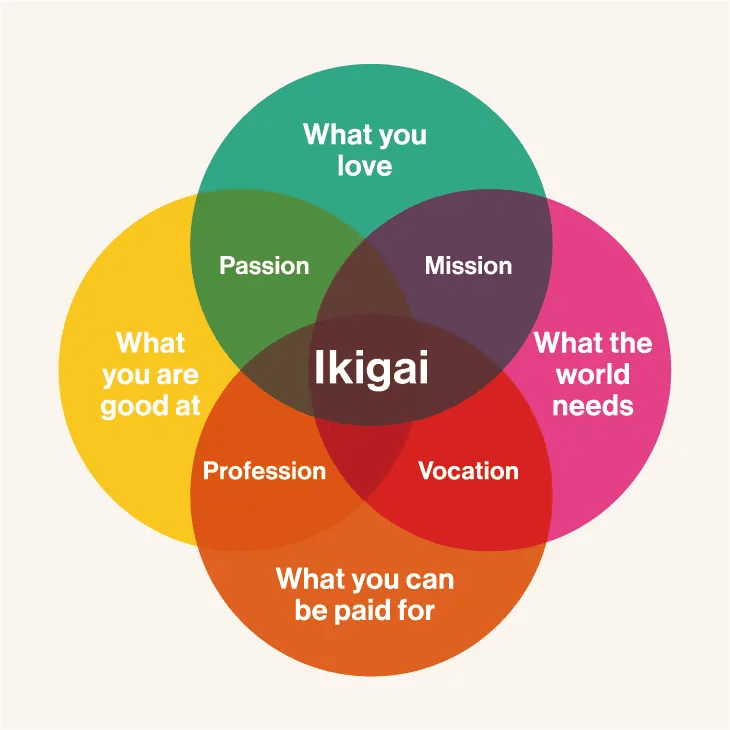
Image Source: https://www.japan.go.jp/kizuna/2022/03/ikigai_japanese_secret_to_a_joyful_life.html
How Ikigai Impacts Professional Life
When your work connects to your Ikigai, effort feels more natural. You are not only working for money or approval. You are contributing in a way that fits who you are.
This does not mean every task is enjoyable. It means you understand why the work matters. This perspective reduces burnout and increases resilience. You recover faster from setbacks because your work feels meaningful, not empty.
Ikigai also helps with career decisions. Instead of asking what pays the most or looks best, you ask what aligns with your values and strengths.
Ikigai in Home Office Life
Working from home can blur the line between purpose and routine. Days may feel repetitive and disconnected. Ikigai brings intention back into daily structure.
You start your day with clarity. You choose tasks that move you closer to something meaningful. Even small actions feel valuable because they serve a bigger picture.
Ikigai also helps set boundaries. When you know what matters, you stop overworking on things that do not.
How Ikigai Supports Studying
Studying becomes easier when it connects to a deeper reason. Instead of memorising facts for exams, you link learning to future impact.
Ikigai turns studying into preparation rather than pressure. It helps you choose subjects with purpose and stay motivated during difficult phases.
Students who understand their why tend to stay focused longer and recover better from failure.
Ikigai in Everyday Life
Ikigai is not limited to work or study. It appears in hobbies, relationships and simple routines. Cooking a meal, helping someone or learning a new skill can all be expressions of Ikigai.
It teaches you to value progress over perfection and presence over speed. Life becomes less about rushing and more about meaning.
How to Begin Finding Your Ikigai
Start with reflection rather than answers:
- What activities make time disappear
- What problems do you enjoy solving
- What values guide your decisions
- What skills feel natural to you
Write these thoughts down. Notice patterns. Your Ikigai reveals itself through awareness, not force.
A Life Guided by Purpose
Ikigai reminds us that productivity without purpose leads to exhaustion. Purpose without action stays abstract. When the two meet, life feels balanced and alive.
Finding your Ikigai is not about changing everything overnight. It is about aligning small choices with what gives your life meaning.
You can also follow us on:
Youtube, Substack, Instagram, LinkedIn, Facebook, Bluesky, TikTok, Pinterest, Flipboard
And don’t forget to sign up for our newsletter to get the next article in this series — where we’ll unpack Embracing Taoism: The Philosophy of Harmony and Simplicity
Explore the full series: Exploring Philosophies and Mindsets from Around the World









Leave a reply to Exploring Philosophies and Mindsets from Around the World – Roya Bloom Cancel reply