

Pressure can make you—or break you. The trick is knowing how much is too much.
The Yerkes-Dodson Law explains a simple but powerful idea:
There’s an optimal level of stress for peak performance. Too little, and you underperform. Too much, and you crack.
Most of us walk a tightrope between motivation and burnout without realizing there’s a science to managing that edge.
This law is essential for students, professionals, and anyone chasing better focus and results.
What Is the Yerkes-Dodson Law?
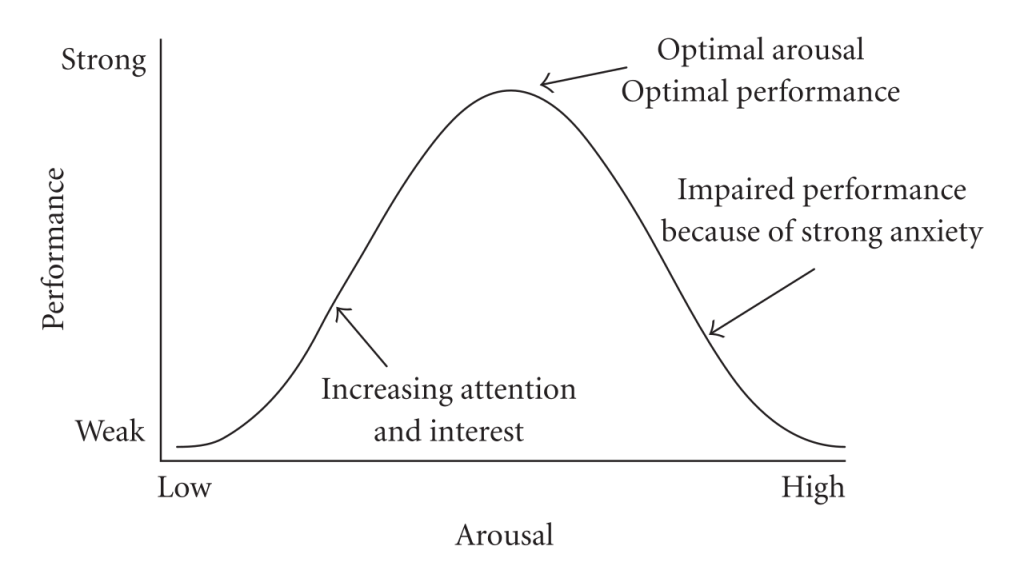
Psychologists Robert Yerkes and John Dodson discovered that performance increases with physiological or mental arousal—but only up to a point. After that, performance sharply declines.
Picture a curve:
- Low stress = boredom, lack of drive.
- Moderate stress = alertness, energy, high output.
- High stress = anxiety, mistakes, shutdown.
In other words, too calm and you’re not engaged—too pressured and you’re overwhelmed.
At Work: Pressure vs. Productivity
Deadlines can boost focus. But when they pile up without a plan, the quality of your work drops.
The sweet spot is:
- A clear goal
- A realistic deadline
- A manageable level of challenge
This is where flow happens.
Leaders should aim to keep their teams challenged, not crushed. Teams thrive when expectations stretch them—but not so far that the task feels impossible.
Ask yourself:
→ Am I creating urgency or anxiety?
→ Is this motivating or demoralizing?
In Studying: When Crunch-Time Works—and When It Doesn’t
Many students rely on last-minute pressure to get things done. But there’s a reason that “all-nighters” rarely lead to lasting learning.
A little pressure can help you start. But chronic stress blocks memory and problem-solving.
Try this:
- Break study into short sprints with clear goals.
- Use self-imposed deadlines (set a timer).
- Give yourself space to recover.
It’s not about grinding more—it’s about working in your optimal zone of engagement.
In Life: Managing Your Own Curve
If you’re always exhausted, it’s not a motivation issue—it’s a stress issue.
Use the Yerkes-Dodson curve as a personal check-in:
- Am I bored or underchallenged?
- Am I pushing too hard?
- Where do I feel focused and in control?
Use these cues to adjust your pace, not your ambition.
Bottom Line:
Performance is not just about effort—it’s about how much pressure you apply.
Work smarter by managing your tension curve, not just your time.
Want more insights like this?
Follow us on Instagram, LinkedIn, Pinterest, and Facebook for more productivity tips and tools.
And don’t forget to sign up for our newsletter to get the next article in this series — where we’ll unpack Hofstadter’s Law: Why Everything Takes Longer Than You Think.
Let’s change the way we think about productivity—one principle at a time.
Explore the full series: The 6 Laws That Secretly Influence Your Focus, Time, and Decisions









Leave a Reply