
-
 Continue reading →: Timeless Wisdom for a Modern Life – What five Japanese Philosophies Teach Us About Work, Learning, and Living Well
What if the most powerful productivity tool wasn’t a new app, but an ancient way of thinking? While hustle culture often pushes us to do more, faster, Japan’s time-honored philosophies invite us to think deeper, work more meaningfully, and live with greater clarity. These six principles—Ikigai, Wabi-Sabi, Ichigo Ichie, Kodawari…
-
 Continue reading →: Kidlin’s Law – Why You Can’t Control What You Don’t Write Down
If you don’t define the problem, you’re solving the wrong one. Kidlin’s Law states: “If you write down a problem clearly, half of the work is done.” It sounds simple. Obvious, even. But that’s what makes it so powerful—and so often ignored. Think about the last time you felt overwhelmed…
-
 Continue reading →: Gilbert’s Law – Why Things Rarely Go as Smoothly as We Plan
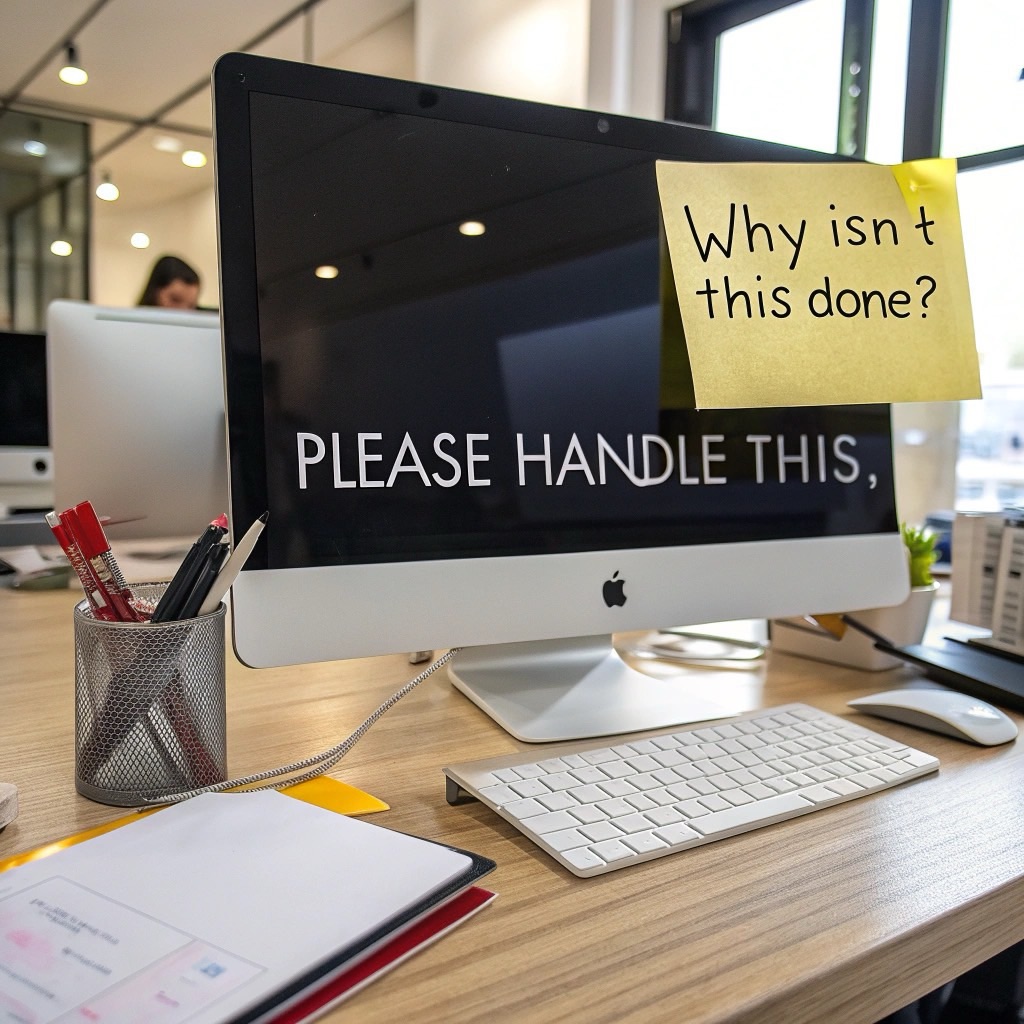
“Problems are not stop signs, they are guidelines.” But what if we consistently underestimate them? Gilbert’s Law states: “The biggest problem at work is that we don’t think there should be problems.” This deceptively simple observation hits hard—especially when our best-laid plans go sideways. How often have you drafted a…
-
 Continue reading →: Wilson’s Law: Why What You Measure Shapes What You Become
What gets measured, gets managed. But is that always a good thing? Wilson’s Law tells us: “We tend to prioritize what we can measure over what truly matters.” It’s a quiet force behind the way we structure our work, judge our success, and even define our goals—often without realizing it.…
-
 Continue reading →: Falkland’s Law – When Doing Nothing Is the Smartest Move
Should you act, or wait? That’s a dilemma we face more often than we realize. Falkland’s Law offers an elegant answer: “When it is not necessary to make a decision, it is necessary not to make a decision.” What Is Falkland’s Law? Named after Lucius Cary, the 2nd Viscount Falkland,…
-
 Continue reading →: The Charting Method – Bringing Clarity to Complexity
Ever feel like your notes are a tangled web of unrelated points? If you’re dealing with dense, comparison-heavy material—especially in subjects like history, law, medicine, or project meetings—linear note-taking can become more confusing than helpful. The Charting Method is a clean, structured alternative that transforms complexity into clarity. What Is…
-
 Continue reading →: The 6 Laws That Secretly Influence Your Focus, Time, and Decisions
Have you ever wondered why time slips through your fingers even when your calendar looks well-planned? Or why tasks expand beyond reason, and energy levels dip at the worst moments? These may not just be personal quirks. They’re often rooted in subtle patterns of human behavior—described by six intriguing concepts…
-
 Continue reading →: Mind Map Method – Unlocking Creativity and Clarity in Note-Taking
Your brain doesn’t think in lines—it thinks in connections. That’s the core idea behind the Mind Map Method, a visual note-taking approach that mirrors how we process and recall information. Instead of lists, you use branches, keywords, colors, and images to create a map that radiates from a central idea.…
-
 Continue reading →: The WOOP Method – Turning Goals into Action with Clarity
Why do so many goals fall flat, even when our motivation is high? Often, it’s because intention alone isn’t enough. We imagine the result, but we don’t anticipate what might get in the way—or how to respond when it does. That’s where the WOOP Method steps in: a structured, evidence-based…
-
 Continue reading →: The Outline Method: Structured Notes for Structured Thinking
Some ideas don’t need doodles or post-its. They need structure. When information comes fast—during lectures, meetings, or deep study sessions—clarity is everything. The Outline Method offers a clean, linear system that helps you organize ideas as you hear or read them, making it easier to review, recall, and connect key…
This is Roya Bloom!
Your Day, Your Way, Our Planner

Questions, suggestions, or just want to say hello? We’d love to hear from you! Reach out to us using the information below, and our team will get back to you as soon as possible. Let’s make things happen together!
Let’s connect
Join the fun!
Stay updated with our latest productivity hacks by joining our newsletter.