Have you ever left a meeting or a lecture feeling like you barely remember what was discussed? Taking effective notes is an essential skill for retaining information, organizing thoughts, and staying productive. Yet, many people struggle to find the right method that works for them.
Not all note-taking techniques are created equal—some are better suited for creative brainstorming, while others are perfect for structured learning or meeting documentation. In this guide, we’ll explore some of the most effective note-taking methods, including the Doodle Method, Stick Notes Method, and Cornell Notes, along with other techniques that can help you capture and recall information more efficiently.
1. The Doodle Method: Engaging Your Brain Visually
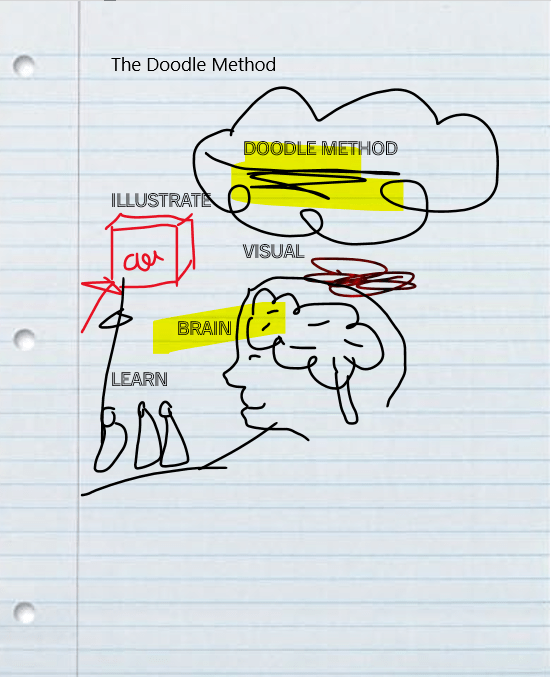
If traditional note-taking feels dull or ineffective, doodling while taking notes can help boost comprehension and memory retention. The Doodle Method combines visuals with text to make information more engaging.
How It Works:
- Instead of writing in linear sentences, use symbols, sketches, and flowcharts to represent ideas.
- Illustrate concepts as they are explained—this helps in linking ideas together.
- Combine short notes with images to create a visual story of the discussion.
Best For:
✔ Creative thinkers who retain information better through imagery.
✔ Meetings or lectures that involve complex concepts or storytelling.
✔ People who struggle with traditional written notes.
Pro Tip:
You don’t have to be an artist—simple sketches and stick figures work just as well as detailed drawings. The goal is to engage your brain differently, making it easier to recall information later.
2. The Stick Notes Method: Organizing Information in Small Bites
Sticky notes aren’t just for quick reminders; they can be a powerful tool for structuring ideas and summarizing key points.
How It Works:
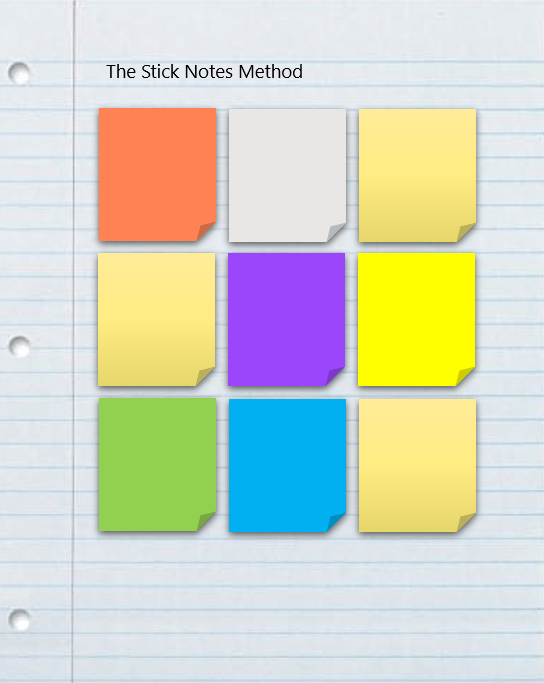
- Write down one key idea or action item per sticky note.
- Arrange them on a board, desk, or wall to visualize the flow of ideas.
- Color-code them for categories (e.g., red for urgent tasks, blue for general notes).
Best For:
✔ Brainstorming sessions, where ideas can be moved around and grouped.
✔ Meetings, to track decisions and action items.
✔ Students, who want to break down complex topics into digestible pieces.
Pro Tip:
After a meeting, take a picture of your sticky note layout so you can reference it later. You can also transfer them into a digital tool like Trello or Notion for long-term storage.
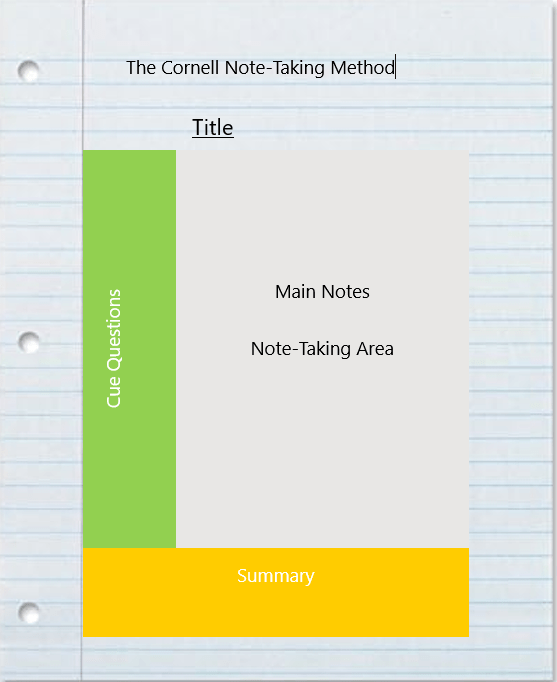
3. The Cornell Note-Taking Method: A Structured Approach
Developed at Cornell University, this method helps organize notes systematically for easy review and recall.
How It Works:
- Divide your page into three sections:
- Left Column (Cues): Write keywords, questions, or topics.
- Right Column (Notes): Jot down main points and explanations.
- Bottom Section (Summary): Summarize the key takeaways in a few sentences.
- After the lecture or meeting, review your notes by covering the right column and testing yourself using the cues.
Best For:
✔ Students studying for exams.
✔ Professionals who need to capture key meeting points for quick reference.
✔ Anyone who wants a structured and efficient way to review notes.
Pro Tip:
Spend 5–10 minutes daily reviewing your Cornell Notes—this spaced repetition improves retention.
4. The Outline Method: Simple and Logical
The Outline Method is one of the most widely used techniques for taking organized, easy-to-review notes.
How It Works:
- Write main topics as headings and list supporting details underneath.
- Use bullet points or numbering to structure your notes.
- Keep details concise, focusing on key facts.
Best For:
✔ Lectures or meetings with clearly structured content.
✔ Taking notes quickly while keeping things neat.
✔ Anyone who prefers hierarchical organization.
Pro Tip:
Use indentation to differentiate levels of importance, making your notes visually easy to scan.

5. The Mind Map Method: Connecting Ideas Visually
Mind mapping is ideal for capturing ideas in a non-linear way, especially when brainstorming or working through complex topics.
How It Works:
- Start with a central idea in the middle of the page.
- Branch out into main themes related to that idea.
- Add subtopics and supporting details to each branch.
Best For:
✔ Creative thinkers who prefer visual over textual notes.
✔ Planning projects, brainstorming sessions, or conceptual learning.
✔ Breaking down complex information into digestible pieces.
Pro Tip:
Use colors and icons to make connections between ideas more apparent.

6. The Charting Method: Organizing Information Efficiently
The Charting Method is great for organizing information into easy-to-read categories.
How It Works:
- Divide your page into columns and rows.
- Use column headers for main topics and rows for details.
Best For:
✔ Comparing and contrasting information.
✔ Meetings with a lot of data or structured discussion points.
✔ Organizing research findings.
Pro Tip:
If you’re taking notes digitally, consider using tables in Google Docs or Excel to create a structured format.

Which Note-Taking Method is Right for You?
The best note-taking method depends on your learning style and the type of information you need to capture. If you’re:
- A visual thinker → Try Doodle Notes or Mind Mapping.
- A structured learner → Use the Cornell Method or Outline Method.
- Handling brainstorming or meetings → Stick Notes and Charting work best.
- Studying for exams or summarizing discussions → The Cornell Method or Charting is ideal.
No matter which method you choose, the key is to review your notes regularly and adapt your approach based on the context.
Final Thoughts: Take Notes That Work for You
Great notes are more than just words on a page—they’re a tool for better thinking, learning, and decision-making. By experimenting with different methods, you’ll discover what works best for you in different situations.
Want to get more organized? Try one of these note-taking techniques in your next meeting or study session and see the difference it makes!









Leave a reply to The Yerkes-Dodson Law – Why More Pressure Doesn’t Always Equal Better Performance – Roya Bloom Cancel reply