Have you ever finished reading a book, watching a training video, or attending a class and thought, “I learned something… but I cannot really remember what it was”?
This happens more often than people realize. We spend hours reading articles, watching tutorials, listening to podcasts, and attending meetings. We consume information almost every minute of the day. But consuming information is not the same as learning.
Real learning begins when you become curious, ask questions, and reflect on what you have discovered.
That is exactly what the KWL Method helps you do.
Instead of jumping straight into new information, the KWL Method encourages you to stop, think, and actively engage with the topic before, during, and after learning. It is simple enough for children to use, yet powerful enough for students, professionals, and anyone who wants to learn more effectively.
What is the KWL Method?
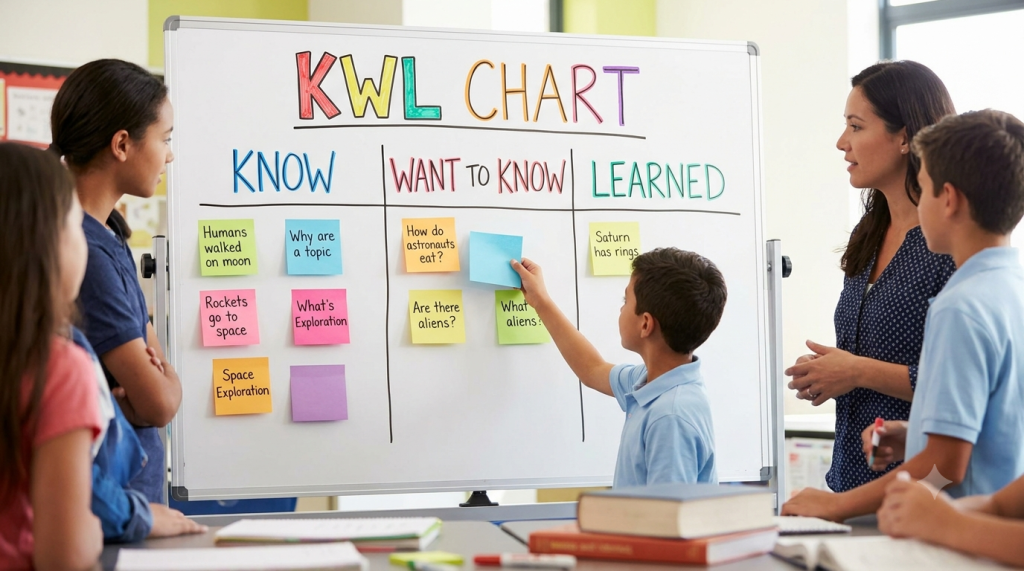
KWL stands for three simple questions.
K means What do I already Know?
W means What do I Want to know?
L means What have I Learned?
Before you begin learning, you write down everything you already know about the topic. This activates your existing knowledge and helps your brain connect new information with what you already understand.
Next, you write down what you want to learn. These questions give your brain a clear purpose. Instead of reading passively, you begin searching for answers.
Finally, after you finish learning, you write down what you have learned. This reflection helps move information from short term memory into long term memory.
The method is simple, but it changes the way your brain approaches learning.
Why does the KWL Method work?
Our brains are naturally curious. When we ask questions, our attention increases. We begin looking for answers instead of simply reading words.
The KWL Method also activates prior knowledge. Every new piece of information is easier to remember when it connects to something you already know. Your brain builds stronger networks instead of storing isolated facts.
The final step is equally important. Reflection strengthens memory. When you summarize information in your own words, your understanding becomes deeper and longer lasting.
This is why the KWL Method feels less like studying and more like having a conversation with the topic.
How to use the KWL Method
The method only takes a few minutes before and after every learning session.
Start by drawing three columns on a sheet of paper or opening a simple document.
In the first column, write everything you already know about the topic. Do not worry if some information is incomplete or even incorrect. The goal is simply to activate your current knowledge.
In the second column, write the questions you want answered. What are you curious about? What do you hope to understand? These questions will guide your attention while you learn.
Then begin reading, watching, or listening.
When you finish, complete the third column. Write the most important things you learned. Answer your original questions and note any surprising discoveries.
This short reflection often makes the difference between remembering something for a day and remembering it for months.
How it helps in professional life
Learning is part of almost every job today. New software, new technologies, changing processes, and new regulations require continuous development.
The KWL Method helps you learn with purpose instead of simply collecting information.
Before attending a meeting or training session, write down what you already know and what you hope to learn. During the session, your brain automatically searches for the answers that matter most to you.
Afterwards, summarize the key lessons and decide how you will apply them in your work.
This approach improves focus, reduces wasted time, and helps you remember important information long after the meeting has ended.
It is especially useful when working from home, where distractions are everywhere and learning often happens independently.
How it helps students
Many students begin studying by opening a textbook and reading from the first page to the last.
The KWL Method creates a much more active learning experience.
Instead of simply reading, students become investigators. They ask questions, search for answers, and connect new ideas with previous knowledge.
This improves concentration and makes studying more interesting because the brain is actively solving problems instead of passively receiving information.
The method also makes revision easier. Looking back at the three columns provides a clear picture of how much progress has been made.
How it helps in everyday life
Learning is not limited to school or work.
Whether you want to learn a new language, understand personal finance, improve your cooking, or explore a new hobby, the KWL Method keeps your learning organized.
It helps you stay curious instead of overwhelmed.
Rather than trying to remember everything, you focus on the questions that matter most to you.
This creates a more enjoyable learning experience and gives every book, video, or course a clear purpose.
Using AI with the KWL Method
Artificial Intelligence can make the KWL Method even more effective when used wisely.
After completing the first two columns, you can ask AI to recommend reliable resources that answer your questions.
Once you finish learning, AI can help summarize your notes, create quiz questions, explain difficult concepts in simpler language, or generate flashcards for future review.
The important part is that your questions come first.
Do not ask AI what you should learn.
Ask yourself first. Then let AI help you find the answers.
This keeps you actively involved in the learning process while using technology as a valuable assistant rather than a replacement.
Common mistakes to avoid
Some people rush through the first two columns because they want to start learning immediately.
Ironically, spending just five minutes thinking before you begin often saves much more time later because your attention becomes focused.
Another common mistake is writing very general questions such as “Learn everything about marketing.”
Instead, ask specific questions like “How does email marketing increase customer loyalty?” or “Why do customers trust certain brands more than others?”
The more focused your questions, the more focused your learning becomes.
Learning Starts with Curiosity
The KWL Method reminds us that learning is not about memorizing the most information.
It is about asking better questions.
When you stop for a moment to think about what you already know, what you want to discover, and what you have learned, your brain becomes an active participant instead of a passive observer.
That small change can completely transform the way you study, work, and grow.
The next time you open a book, start an online course, or attend a meeting, do not begin with the first page.
Begin with a question.
Because every great learner starts with curiosity.







Leave a comment