

Every organization has them. They are not always the people with the biggest titles, the highest salaries or the most impressive job descriptions. They are often the people working quietly in the background, connecting departments, helping colleagues, solving problems that technically belong to nobody and making sure things keep moving when the normal process breaks down. You might not notice them when everything is working perfectly. But when one of them leaves, suddenly everyone notices.
These people are often described as Glue Players. They are the people who hold an organization together through relationships, knowledge, trust and informal coordination. They are the person who knows exactly who to call when a customer has an unusual problem, who understands why an old process exists, who can connect the right people across departments and who helps a new employee understand how things really work. Their contribution may not appear clearly in a performance dashboard, but it can have an enormous impact on how an organization functions.
And here is the interesting part: the organizational chart rarely shows where the real glue is.
What Is a Glue Player?
A Glue Player is someone who creates connections that help other people and teams work effectively together. They may coordinate information, build relationships, share knowledge, solve unexpected problems or simply make it easier for people to get things done. They do not necessarily have formal authority. In fact, many Glue Players are not managers at all.
Think about the person everyone goes to when they are stuck. Maybe they have been with the company for ten years and know almost everyone. Maybe they understand the history behind decisions that nobody else remembers. Maybe they know that the person in Finance needs a particular document before approving something, or that the developer who built an old system is still the fastest person to ask about it.
That knowledge is extremely valuable, but it is often invisible because it exists inside relationships rather than documents.
The Organization Behind the Organization
Every company has a formal structure. There are departments, managers, reporting lines, responsibilities and processes. But underneath that structure is another organization that is much harder to see.
It is the network of people who actually make information move.
Who talks to whom? Who trusts whom? Who knows who can solve a particular problem? Who can get an answer from another department in ten minutes when everyone else would need three emails and a meeting? Who knows which process can be bypassed when a customer has an urgent problem?
That informal network can be just as important as the official hierarchy.
A manager might have the authority to tell two departments to cooperate. A Glue Player often has something different: the relationships that make cooperation actually happen.
Why Glue Players Are So Valuable
Imagine a company with 500 employees. One employee has worked there for eight years and has built relationships across sales, marketing, finance, operations and product development. They know the systems, the customers, the history and the people.
Now imagine that employee leaves.
The organizational chart does not change. The departments are still there. The systems still work. Everyone still has a job description.
Yet suddenly projects take longer. People do not know who to contact. Questions are passed from one department to another. New employees struggle to find information. Old problems reappear because nobody remembers how they were solved.
The company has lost something that was never officially recorded.
It has lost connectivity.
The Hidden Cost of Losing Knowledge
When an employee leaves, companies usually think about recruitment costs, onboarding and lost productivity. Those are important, but they do not tell the whole story.
A Glue Player may take years of relationships and institutional knowledge with them.
They know why a particular customer behaves the way they do. They know which processes are fragile. They know who has the expertise to solve a difficult technical problem. They know which internal conflicts have existed for years. They know what happened the last time the company tried to change a particular process.
You can replace a job title quickly.
You cannot replace years of relationships overnight.
This is one reason why the true cost of employee turnover can be difficult to calculate.
The Work Nobody Measures
One of the biggest problems with Glue Players is that much of their contribution is invisible.
Imagine an employee spends 30 minutes helping another team avoid a serious mistake. Nothing appears in the productivity dashboard. No new customer was acquired. No project was officially completed. No revenue was directly generated.
But a problem was prevented.
Or imagine someone spends an hour helping a new employee understand the company’s systems. That hour might not appear as a measurable achievement, but it could save the new employee dozens of hours over the following months.
This creates a strange paradox: the better Glue Players are at preventing problems, the less visible the problems become.
When everything works, people may simply assume that everything works naturally.
Sometimes it works because someone is quietly holding it together.
The Problem With Measuring Only Individual Performance
Modern organizations understandably want measurable performance. Sales numbers, project deadlines, customer satisfaction and other metrics can be extremely useful.
But when organizations measure only individual output, they can miss the people who create value through other people.
A highly productive employee might complete 100 tasks.
Another employee might complete 60 tasks but spend part of their time helping five colleagues become faster and more effective.
Which employee created more value?
There is no universal answer. It depends on the nature of the work.
But the question is important because leadership often rewards what is easiest to count.
What is measurable is not automatically what is most valuable.
Glue work can be difficult to quantify precisely because its impact spreads across the organization.
The Competence Tax
There is another danger.
The more reliable someone becomes, the more problems people give them.
The person who always knows how to fix something gets asked to fix it again. The person who is good at organizing meetings gets asked to organize another meeting. The person who helps new employees gets another new employee. The person who can communicate with difficult stakeholders gets sent into the next difficult conversation.
Eventually, competence becomes a tax.
The better the person performs, the more the organization depends on them.
This can create an unhealthy situation where your most valuable employees become your most overloaded employees.
A good leader needs to recognize this before it becomes a problem.
When a Glue Player Becomes a Bottleneck
Being indispensable sounds like a compliment.
It can actually be a warning sign.
Imagine that one person is the only employee who understands a particular system. Everyone goes to them with questions. Every unusual request passes through them. Every department depends on their knowledge.
They have become a single point of failure.
If they are sick, everything slows down.
If they take a holiday, people wait.
If they resign, the organization panics.
This is not a strong organization.
It is an organization that has concentrated too much knowledge in one person.
The goal should therefore not be to make Glue Players indispensable.
The goal should be to use their knowledge to make the entire organization stronger.
From Hero Dependency to Organizational Capability
This is where leadership becomes important.
Instead of saying, “Thank goodness Sarah knows how to fix this,” ask, “How can we make sure this knowledge is shared?”
Document important processes. Create accessible knowledge bases. Let experienced employees mentor others. Rotate responsibilities where appropriate. Build cross functional teams. Encourage people to introduce colleagues who should know each other.
The Glue Player should not be the only bridge.
They should help build more bridges.
That is how individual knowledge becomes organizational capability.
How Do You Find Your Glue Players?
You probably already know who some of them are.
Ask your team a simple question:
“When you have a problem and you don’t know where to go, who do you ask?”
Then ask:
“Who helps you get things done when the normal process doesn’t work?”
You will probably start hearing the same names.
Those people may be your Glue Players.
They are often easy to identify once you stop looking exclusively at job titles and start looking at relationships.
Who connects departments? Who helps new employees? Who knows how things really work? Who notices problems before everyone else? Who can get cooperation without formal authority?
Those are strong signals.
Glue Players Are Leaders Without the Title
One of the most interesting things about Glue Players is that they often demonstrate leadership without being managers.
- They influence people.
- They create cooperation.
- They build trust.
- They solve conflicts.
- They share knowledge.
- They help others succeed.
Nobody may have given them authority to do these things, but people listen to them anyway.
This is an important reminder that leadership and authority are not the same thing.
Authority comes from a position.
Influence comes from trust.
The strongest organizations need both.
Trust Is the Glue
Why do people listen to Glue Players?
Usually because they trust them.
Trust is built through repeated behaviour. People learn that this person will help without making them feel stupid. They know the person will keep confidential information private. They know they will not immediately blame someone when something goes wrong. They know they will give them an honest answer.
Over time, that creates something powerful.
People stop thinking about the person’s job title and start thinking:
“They can help me.”
That is organizational influence.
Glue Players in Remote and Hybrid Teams
Remote work makes Glue Players particularly interesting.
In an office, informal knowledge can spread naturally. Someone hears a conversation while getting coffee. Two employees discuss a problem in the hallway. A manager overhears an issue and offers a suggestion.
Remote work removes many of these accidental interactions.
That can create silos.
A team in Zurich may know exactly what it is doing while another team in London has no idea what is happening. Employees may interact almost exclusively with the people on their own project.
Glue Players can help bridge those gaps.
They introduce people, share context and connect teams that might otherwise remain isolated.
But there is a danger here too: do not turn your Glue Players into the company’s human communication infrastructure.
If every piece of information has to pass through one person, the system needs improvement.
The AI Question
Artificial intelligence makes the role of Glue Players even more interesting.
AI can search documents, summarize meetings, retrieve information and answer questions. Some of the information work traditionally performed by experienced employees can now be automated.
But information is not the same as context.
AI might tell you what the company policy says.
A Glue Player might tell you why the policy exists, who needs to be involved and what happened the last time someone tried to change it.
AI can retrieve a document.
It may not know which relationship needs to be repaired before the document becomes useful.
AI can summarize a disagreement.
It may not understand the history between the two people involved.
As AI becomes better at handling information, human context, judgment and relationships may become even more valuable.
The Multigenerational Advantage
Glue Players can also help organizations navigate different generations and working styles.
Baby Boomers, Generation X, Millennials and Generation Z have entered the workplace under very different conditions. But it is important not to reduce these groups to stereotypes. Individual employees are far more complex than generational labels.
The real challenge is that people often bring different experiences, communication preferences and expectations.
Someone who has been with a company for 20 years may understand its history deeply. Someone who joined six months ago may see problems that long term employees have stopped noticing.
A good Glue Player can connect these perspectives.
They can help transfer institutional knowledge without preventing new thinking.
That makes them particularly valuable during periods of change.
The Risk of Taking Them for Granted
Organizations often notice Glue Players only after they become unavailable.
As long as everything works, their contribution can disappear into the background.
Then they take two weeks off.
Suddenly people cannot find information.
They return and everyone realizes how much depends on them.
That is a warning sign.
If an organization collapses temporarily whenever one person is away, the problem is not that the person is too valuable.
The problem is that too much organizational knowledge is concentrated in one place.
Don’t Let Helping Become a Career Disadvantage
There is another issue leaders need to consider.
Glue Players can spend so much time helping others that their own achievements become less visible.
- They mentor colleagues.
- They answer questions.
- They coordinate across departments.
- They solve problems.
- They make everyone else more effective.
But their contribution may not fit neatly into the traditional performance review.
If the company only rewards individual output, the person who creates value through collaboration may eventually conclude that helping others is hurting their own career.
That would be a serious leadership failure.
If collaboration matters, it needs to be recognized.
If mentoring matters, it should be part of the performance conversation.
If cross functional leadership matters, people should be able to build careers around it.
Organizations get more of what they reward.
The Best Glue Players Make Themselves Less Necessary
This may be the most important lesson.
A weak Glue Player thinks:
“Everyone needs me.”
A strong Glue Player thinks:
“How can I make sure everyone knows this?”
The first person protects knowledge.
The second person distributes it.
The first person becomes a bottleneck.
The second person builds capability.
The best Glue Players introduce people who should know each other, teach others what they know and create systems that continue working without them.
Their goal is not to become indispensable.
Their goal is to make the organization more capable.
That is leadership.
A Simple Glue Player Audit
Try this exercise with your leadership team.
Choose five recurring problems in your organization and ask, “Who usually solves this?” Then ask, “What would happen if that person was unavailable for three months?”
If the answer is, “We would have a serious problem,” you have found an area where knowledge is too concentrated.
Now ask, “Who else could learn this?”
Document the process. Create a backup. Introduce people. Share the knowledge.
You are not replacing the Glue Player.
You are turning their expertise into organizational strength.
Your Hidden Organizational Network
Every company has two structures.
There is the structure you can see on the organizational chart.
And there is the structure you discover when you ask:
“Who actually gets things done?”
That second structure is built on relationships, trust, knowledge and influence.
Glue Players sit at important points within that network.
They connect people who might otherwise remain disconnected.
They move information.
They reduce friction.
They create trust.
And sometimes they solve problems that nobody even realizes existed.
The Leadership Lesson
Great leaders do not only ask who has the highest individual performance.
They also ask:
“Who makes everyone around them better?”
That is a different question.
A high performer can create enormous individual value.
A Glue Player can multiply the effectiveness of an entire network.
That contribution is harder to measure, which is precisely why leaders need to pay attention to it.
If you ignore your Glue Players, they may become frustrated.
If you overload them, they may burn out.
If you fail to recognize them, they may leave.
And when they leave, you may suddenly discover that your organization depended on them far more than your organizational chart ever suggested.
Look Beyond the Titles
The next time something goes wrong in your organization, pay attention to who people call.
It may not be the CEO.
It may not be the department head.
It may not even be the person officially responsible.
It may be the person who knows how the pieces fit together.
That person could be one of your most valuable employees.
So ask yourself:
Who are the Glue Players in my organization?
Then ask the more important question:
Am I building an organization that depends on them, or an organization that learns from them?
Because the goal is not to have one person holding everything together.
The goal is to build enough trust, knowledge and connection that the organization itself becomes stronger than any individual inside it.
That is what great leadership does.
Research Behind the Idea
“Glue Player” is a useful management concept rather than a formally established psychological theory. However, the idea is strongly connected to established research on social networks, informal organizational structures, knowledge sharing and organizational learning.
Research by Ronald Burt on structural holes examines the value created by people who connect groups that otherwise have limited interaction. These individuals can gain access to information and opportunities that do not easily flow across disconnected parts of a network. This provides a useful academic parallel to the idea of Glue Players acting as organizational bridges. Ronald Burt: Research on Social Networks and Structural Holes
Research on organizational networks also shows that formal organizational charts do not necessarily represent the way information, influence and collaboration actually move through a company. Informal networks can have a significant impact on organizational change and effectiveness. Harvard Business Review: The Network Secrets of Great Change Agents
Amy Edmondson’s research into psychological safety provides another important connection. Teams learn more effectively when people feel able to ask questions, share concerns and discuss mistakes without fear of interpersonal punishment. Trust based employees who connect people can play an important role in creating this environment. Harvard Business School: Psychological Safety and Learning Behavior in Work Teams
Research on communities of practice also helps explain why organizational knowledge is not always contained in manuals or databases. Employees often develop knowledge through shared experience, interaction and participation in communities. That knowledge can be particularly difficult to replace when experienced employees leave. Harvard Business Review: Communities of Practice: The Organizational Frontier
The Leadership Series Continues
Leadership becomes especially difficult when the information available to us is incomplete.
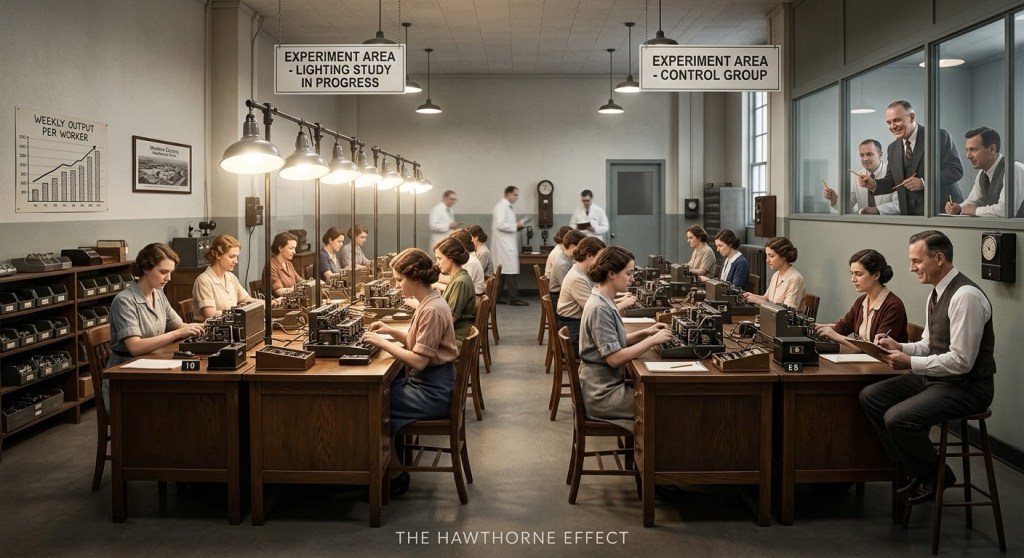
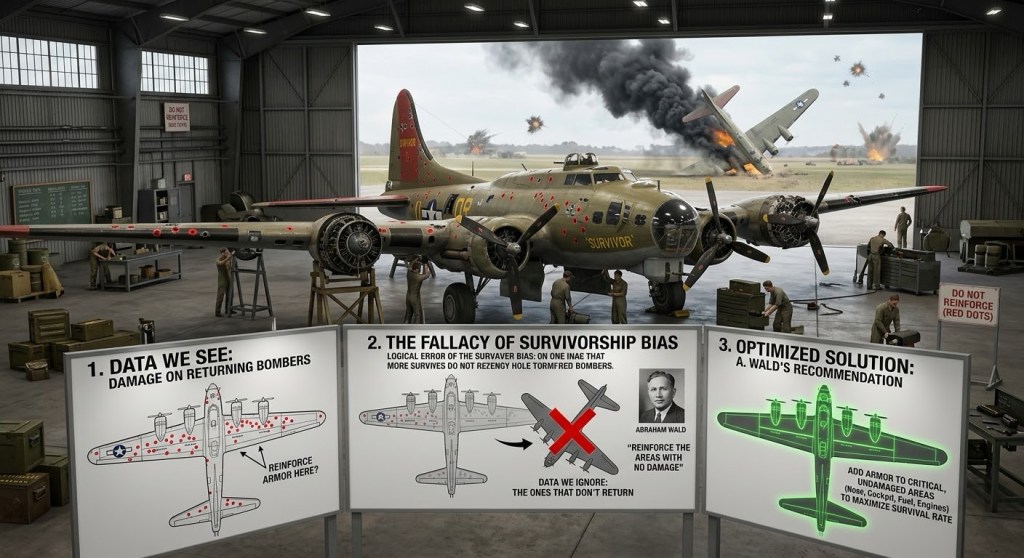
We have already explored how The Red Car Theory teaches us to notice what we focus on, how The 4 Burner Theory reminds us that priorities require trade offs, how Survivorship Bias can make successful people look like perfect role models, and how The Hawthorne Effect shows the power of attention.
Now Glue Players show us something different: sometimes the most important parts of an organization are the parts we cannot see on the organizational chart.
And that leads to the next question:
What Happens When We Only Look at the People Who Made It?
In our next leadership article, we go deeper into one of the most dangerous decision making errors:
Survivorship Bias: Why Studying Successful People Can Make You Worse at Making Decisions.
Because sometimes the people you can see are not the people who can teach you the most.





Leave a Reply