

Artificial intelligence can write reports, analyze data, create presentations, summarize meetings and answer questions in seconds. Employees can now access knowledge that once required years of experience or a team of specialists. Work is no longer tied to a single office, and a team can include someone who started their career before the internet alongside someone who has never known a world without smartphones.
With so much technology available, it would be reasonable to ask whether leadership is becoming less important.
The opposite may be true.
The more complex work becomes, the more important it is to have someone who can create clarity, build trust and help people move in the same direction. Technology can make people faster, but it cannot decide where they should go. AI can generate options, but someone still needs to use judgment. It can automate tasks, but it cannot automatically create trust between people who have different experiences, expectations and ideas about what work should look like.
This is why leadership matters today.
Not because leaders need to have all the answers, but because organizations increasingly need people who can help others make sense of a changing world.
This is the first article in a new Leadership Series. Over the coming weeks, we will explore ideas from psychology, business, productivity and decision making that can help us understand what leadership really means. But before looking at individual concepts, it makes sense to start with the bigger question.
What does good leadership look like today?
Leadership Is More Than a Job Title
Leadership and management are often treated as the same thing, but they are not.
Management is about organizing work. It involves planning, coordinating resources, setting processes and making sure that things get done. Leadership is about direction and influence. It is about helping people understand where they are going and why it matters.
Of course, the two overlap. A good manager often needs leadership skills, and a good leader needs enough management ability to turn ideas into action. But an organization can be very well managed and still lack leadership.
Imagine a team that completes every report on time, attends every meeting and follows every process perfectly. If nobody is asking whether the team is working toward the right goal, efficiency can become a problem rather than a strength.
Leadership asks a different set of questions. Where are we going? Why are we going there? What matters most right now? What should we change? And what should we protect?
These questions are becoming more important because the traditional idea of the leader as the person with the most knowledge is becoming increasingly difficult to maintain.
AI Is Changing the Role of the Leader
For a long time, experience and access to information gave leaders a clear advantage. The senior person often knew more because they had been in the organization longer, had access to more information or had simply spent more years developing expertise.
Artificial intelligence is changing that relationship.
An employee can now use AI to research a topic, generate ideas, analyze information and explore different solutions within minutes. This does not mean that expertise is no longer valuable. It means that information itself is becoming easier to access.
According to Microsoft’s 2025 Work Trend Index, 82 percent of leaders surveyed considered 2025 a pivotal year for rethinking key aspects of strategy and operations. The report also describes a shift toward organizations in which humans increasingly work alongside AI agents, creating new questions about how work should be organized and where human judgment is most valuable. (The Official Microsoft Blog)
This changes what employees need from their leaders.
They do not necessarily need a person who can answer every question faster than everyone else. In many situations, AI may already provide ten possible answers.
- What they need is someone who can ask better questions.
- Which option fits our strategy?
- What are we missing?
- What are the risks?
- What should we automate, and what should remain a human responsibility?
- Who is accountable for the final decision?
These are leadership questions.
In fact, as AI becomes more capable, judgment may become one of the most valuable leadership skills. A good leader does not simply accept the fastest answer. They understand context. They consider consequences. They know that data can be useful without being complete.
The future leader may therefore spend less time being the person who knows everything and more time creating an environment in which people can find, evaluate and use knowledge effectively.
AI can provide intelligence on demand. Leadership provides direction.
Leading When Your Team Is Not in the Same Room
The workplace has changed in another important way.
For generations, leadership was strongly connected to physical presence. A manager could walk through the office, notice who was struggling, have an informal conversation or simply observe how the team was working together.
Remote and hybrid work have removed much of that informal information.
Today, a leader may manage people through video calls, chat messages, shared documents and occasional meetings. It is easier to coordinate tasks than to understand how people are actually feeling. Someone can appear present in every online meeting while becoming increasingly disconnected from the team.
Research published in Personnel Psychology in 2025 examined how employees evaluate the trustworthiness of leaders who work remotely. The study highlights an important challenge of distance: when leaders and employees are physically separated, the relationship itself can change, including how followers perceive and trust their leader. (Wiley Online Library)
This does not mean remote leadership is impossible. It means that leadership has to become more intentional.
In an office, a leader may build trust partly through hundreds of small interactions that happen naturally. In a remote environment, those moments often need to be created deliberately. Communication cannot simply be about assigning tasks or checking progress. People also need context, feedback and the opportunity to raise concerns.
This is where some organizations make a mistake. Instead of improving leadership, they increase control.
- More monitoring.
- More reports.
- More status updates.
- More measurements.
But visibility is not the same as trust.
Knowing that someone is online does not tell you whether they are engaged, motivated or able to do their best work. A leader who cannot see their employees has to learn to lead through clarity, communication and outcomes rather than relying entirely on physical presence.
That is a more difficult form of leadership. But it may also be a better one.
Four Generations, Different Experiences and One Workplace
The modern workplace can also bring together people from several generations.
- Baby Boomers.
- Generation X.
- Millennials.
- Generation Z.
It is easy to turn these groups into stereotypes. Boomers are sometimes described as resistant to technology. Millennials are portrayed as purpose driven. Generation Z is often described as demanding flexibility and work life balance.
Real people are obviously more complicated than the labels.
Generations are not personality types, and birth year alone does not explain how someone thinks or behaves. However, people do enter the workforce under different economic, technological and social conditions. Those experiences can influence what they expect from work and from their leaders.
The leadership challenge is therefore not to memorize a list of generational stereotypes.
It is to understand that people may be motivated by different things.
One employee may value stability because they have experienced several economic downturns. Another may care more about flexibility. Someone may want to become a senior executive. Someone else may define career success through learning, autonomy or the ability to maintain a healthy life outside work.
Deloitte’s 2025 Global Gen Z and Millennial Survey, which included more than 23,000 respondents across 44 countries, illustrates this shift. Only 6 percent of Gen Z and Millennial respondents said that reaching a senior leadership position was their primary career goal. At the same time, learning, development, mentorship, financial security, meaning and well-being played important roles in how respondents viewed their careers. (Deloitte)
The survey also found a clear gap between what many younger employees want from their managers and what they feel they are receiving. Many respondents were looking for guidance, inspiration and mentorship, while managers themselves often spend a large part of their time dealing with immediate problems and administrative tasks. (Deloitte)
This should not lead us to conclude that only younger employees want good leadership. Every generation benefits from clarity, respect and development.
But it does reveal something important.
Employees increasingly expect leaders to do more than simply distribute work.
They expect them to help people grow.
The Best Leaders Do Not Manage Generations. They Connect People.
Imagine a team with two employees.
One has worked in the industry for twenty five years. They understand the history of the organization, know why previous projects failed and can recognize risks that are invisible to newer employees.
The other joined six months ago. They may bring new technical skills, a different perspective and ideas that challenge assumptions the organization has stopped questioning.
A weak leader turns these differences into conflict.
“The younger generation does not understand how things work.”
“The older generation does not want to change.”
A good leader asks a different question.
What can these people learn from each other?
Experience and new perspectives do not have to compete. One of the most valuable things a leader can do is create an environment where knowledge moves in both directions.
The experienced employee can share context that no AI system or onboarding document fully captures. The newer employee can challenge habits that everyone else has accepted for years.
Leadership is often about recognizing value that people cannot immediately see in one another.
Technology Changes, Human Needs Do Not
The tools have changed dramatically, but the basic human questions at work have remained surprisingly consistent.
- Do I understand what is expected of me?
- Does my work matter?
- Can I speak honestly?
- Will I be treated fairly?
- Can I grow?
- Can I trust the people around me?
A good leader cannot answer every one of these questions with a policy or an app.
Trust is built through behaviour.
Clarity is created through communication.
Psychological safety is shaped by how leaders react when someone disagrees, makes a mistake or raises an uncomfortable problem.
This is particularly important during periods of uncertainty. AI is creating opportunities, but it is also creating anxiety. Employees may wonder whether their jobs will change, whether they need new skills or whether technology will eventually replace parts of their work.
According to Deloitte’s 2025 survey, 74 percent of Gen Z respondents and 77 percent of Millennials expected generative AI to affect the way they work within the following year. Many respondents were already using the technology, while also emphasizing the importance of developing both technical and human skills. (Deloitte)
This is where leadership matters.
A leader cannot always promise that nothing will change. In fact, making promises that cannot be kept can damage trust even more.
But a good leader can be honest.
They can explain what is known and what is still uncertain. They can create opportunities for learning. They can involve employees in the transition rather than allowing change to happen around them.
Sometimes the most effective leadership sentence is not, “Everything will be fine.”
It is, “We do not know everything yet. But this is what we know, this is what we are doing, and this is when I will update you.”
People can often deal with uncertainty better than they can deal with silence.
Good Leadership Creates Clarity
One of the greatest sources of frustration at work is not necessarily having too much work.
It is unclear work.
Employees can often handle difficult challenges. What is much harder is not knowing what matters most.
- Who makes the decision?
- What does success look like?
- What should happen when two priorities conflict?
- How much freedom does someone have to act?
- What should be escalated, and what should be handled independently?
Without clarity, people spend time protecting themselves from making the wrong decision. They wait for approval. They attend unnecessary meetings. They send more emails than necessary. They focus on looking busy because they are unsure what results actually matter.
A good leader reduces this unnecessary friction.
That does not mean controlling every detail. In fact, excessive control often creates the opposite effect. The goal is to provide enough direction that people can act independently.
This may become even more important as AI accelerates the speed of work.
If technology allows employees to produce more in less time, organizations will face a different challenge. They will need to decide what deserves that additional capacity.
More output is not automatically better.
More reports are not automatically more useful.
More meetings are not automatically better collaboration.
Leadership determines where the additional capacity goes.
Trust Will Matter More Than Control
The growth of remote work and AI gives organizations an opportunity to measure almost everything.
- How long someone is online.
- How many messages they send.
- How quickly they respond.
- How many tasks they complete.
- How much output they produce.
But measurement creates a dangerous temptation. People often adapt their behaviour to whatever is being measured.
- If response time is the most important metric, people may answer quickly instead of thinking carefully.
- If online hours are rewarded, people may remain visible even when they have finished their work.
- If quantity is measured, quality may suffer.
The role of leadership is therefore not simply to measure more.
It is to decide what is worth measuring.
This requires trust. Trust does not mean ignoring performance. It means creating clear expectations and then giving people enough autonomy to meet them. A good leader should know the difference between accountability and surveillance. Accountability asks, “Did we achieve what we agreed to achieve?” Surveillance asks, “Can I see what you are doing every minute?”
Those are not the same question.
The Leader of the Future Will Not Have All the Answers
Perhaps this is the biggest change of all.
The traditional image of the leader is often someone standing at the front of the room with the answers.
But the modern workplace is too complex for one person to know everything.
Technology changes quickly. Markets change. Employees have specialized knowledge. AI can generate information at a scale that no individual can match.
The strongest leader may therefore be the person who knows how to bring the right people, information and questions together.
This does not mean leaders should avoid making decisions.
Leadership still requires responsibility. There will always be moments when someone has to choose a direction, accept the consequences and move forward without complete information.
But good leaders understand that making every decision themselves is not a sign of strength.
It is often a bottleneck. One of the best tests of leadership is what happens when the leader is not there. Does everything stop? Does the team wait for approval?
Or do people understand the direction well enough to make good decisions themselves? The goal of leadership should not be to make yourself indispensable.
It should be to build a team that becomes stronger because of your leadership, not dependent on your constant presence.
Leadership Is Becoming More Complex
Today’s leaders are expected to navigate artificial intelligence, remote work, changing employee expectations, economic uncertainty and increasingly diverse teams.
That makes leadership more difficult.
But it also makes it more valuable.
Many organizations will have access to the same AI tools. Many will use similar software. Many will have similar strategies and similar data.
The real difference may come from how effectively people work together.
- Do they trust each other?
- Can they disagree without fear?
- Do they understand the goal?
- Can they adapt when circumstances change?
- Are people willing to learn?
- Do they have the confidence to make decisions?
These are not primarily technology questions.
They are leadership questions.
Microsoft’s 2025 Work Trend Index makes a similar point from the perspective of AI transformation. As organizations increasingly experiment with AI agents and automation, leaders are being forced to rethink how humans and technology work together. The challenge is not simply adopting the technology, but redesigning work and determining where human judgment and accountability remain essential. (The Official Microsoft Blog)
Technology may change the way work is done.
Leadership influences whether people can change with it.
So What Is Leadership Today?
Leadership is not about having the biggest office, the loudest voice or the most impressive job title.
It is the ability to create direction and help people move toward it.
A good leader creates clarity when things are confusing. They listen when they do not have enough information. They communicate when people are uncertain. They make decisions when decisions are required. They develop people instead of simply using them to achieve short term results.
Most importantly, they understand that leadership is fundamentally about people.
AI may become more intelligent. Work may become more remote. Generations may have different expectations. But people will still need to trust the people they work with.
They will still want to understand why their work matters. They will still need guidance when the path forward is unclear. And they will still remember how a leader made them feel during periods of uncertainty. Perhaps that is the great paradox of the AI age.
The smarter our technology becomes, the more important it becomes to lead people well.
This Is Only the Beginning
Leadership is not one skill that can be learned from a single book or article. It is a collection of decisions, habits, perspectives and behaviours that appear in everyday situations.
It can be found in the way we use our time, the way we make decisions, the way we react to mistakes and the way we influence the people around us.
Over the next few weeks, this series will explore some of these ideas from unexpected angles.
Coming Up Every Monday
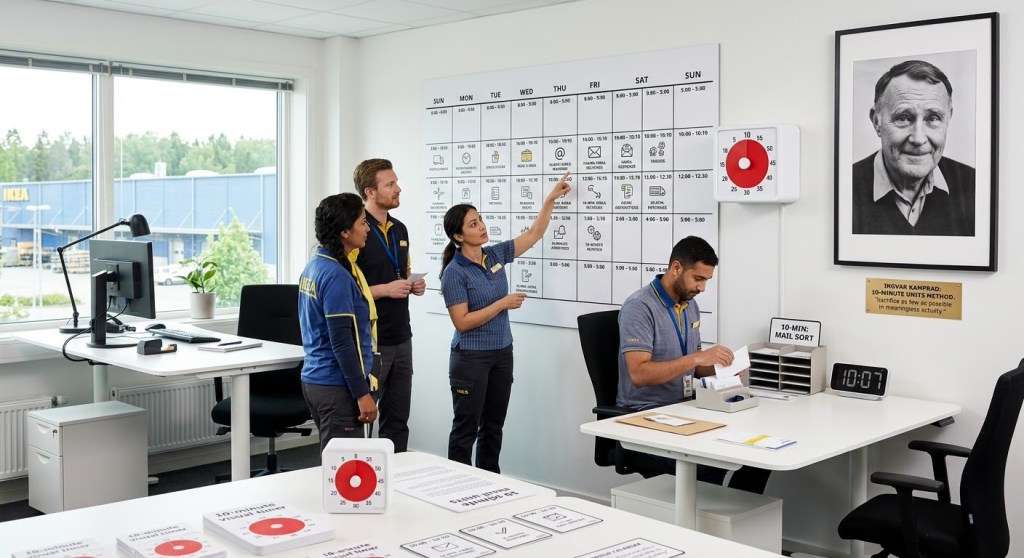
Kamprad’s 10 Minute Rule and What Other CEOs Can Teach Us About Time
A closer look at Ingvar Kamprad’s philosophy of treating time as a collection of small and valuable units, alongside lessons from other business leaders about how they protect one of their most limited resources.
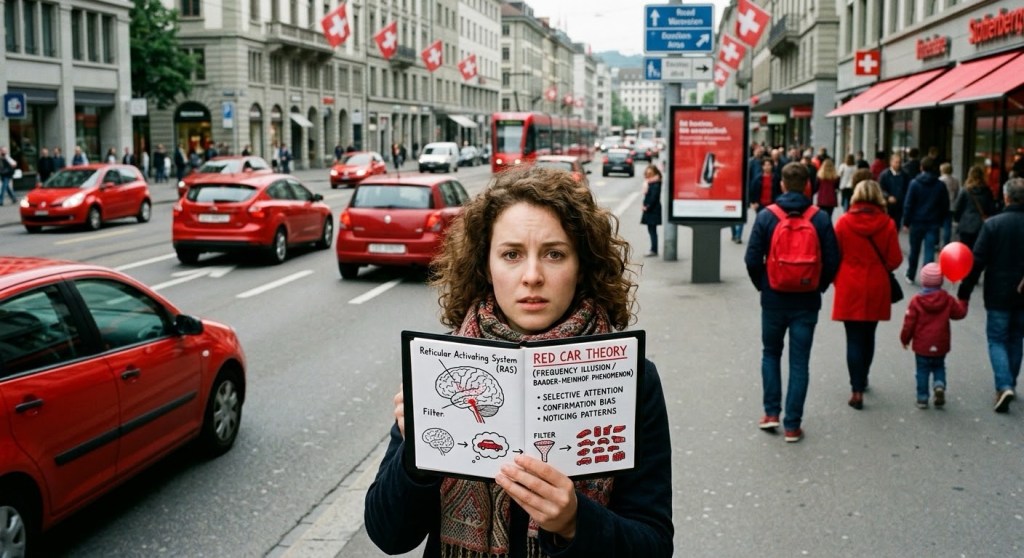
The Red Car Theory
Why do you suddenly start seeing something everywhere once it has your attention? We explore selective attention, perception and what leaders may miss when they focus too strongly on one thing.
Leadership’s 12 Alarming Calls
Every organization gives warning signals. The challenge is recognizing them before they become serious problems. This article explores twelve moments when leaders need to stop, listen and take action.
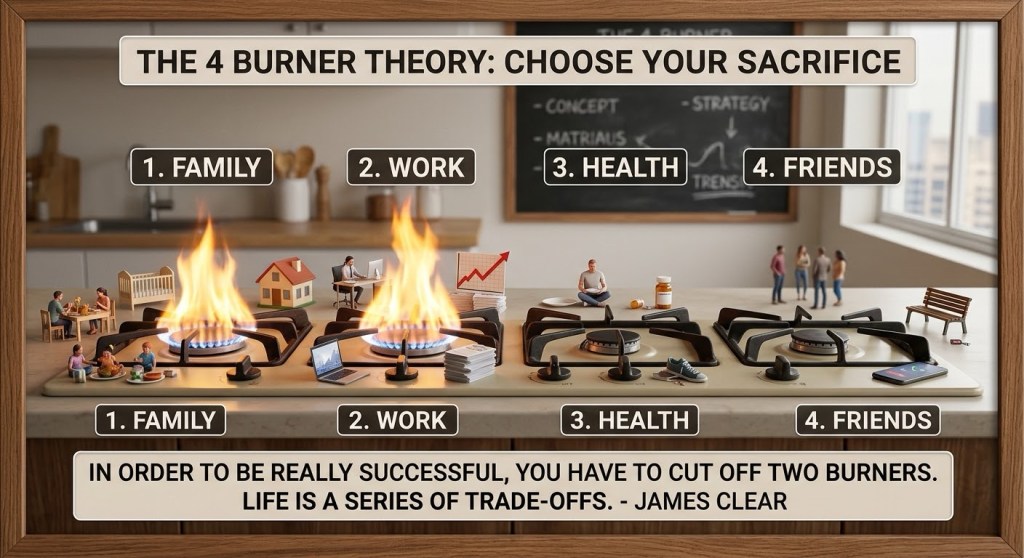
The 4 Burner Theory
Career, family, friends and health. Can you keep all four burners running at the same time? We look at the difficult trade offs behind success and what this theory can teach us about priorities and leadership.
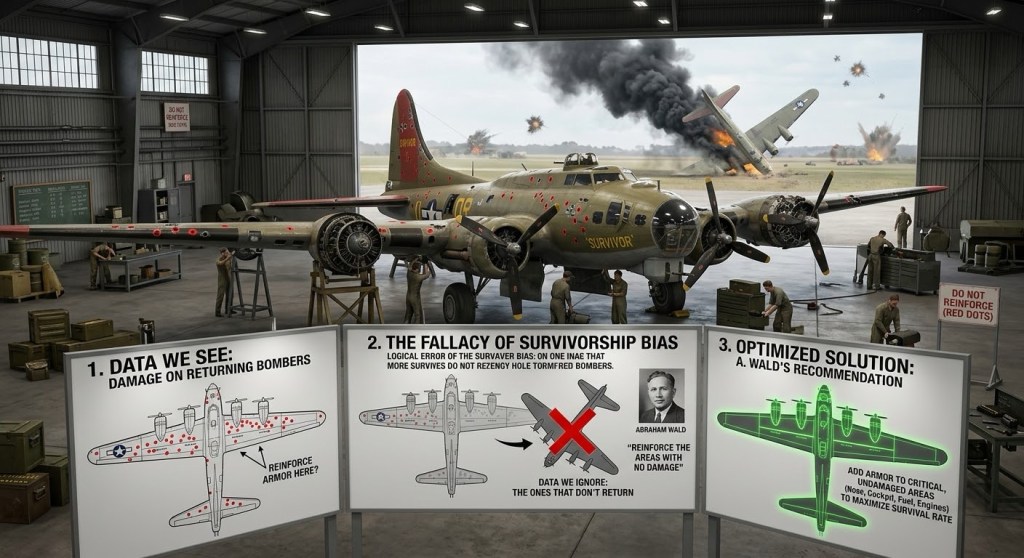
Survivorship Bias
We often study successful people and ask what they did right. But what about the people who did exactly the same things and still failed? This article explores the hidden danger of learning only from visible success.
The Hawthorne Effect
Do people behave differently when they know they are being observed? We explore one of the best known ideas in workplace psychology and what it can teach leaders about measurement, attention and performance.
Glue Players
Not every important person in a team is the highest performer or the loudest voice. Some people make everyone around them better. We explore why these often overlooked Glue Players may be among the most valuable people in any organization.
The Journey Starts Here
The future of leadership will not be defined by who has the most authority.
It will be defined by who can help people navigate change.
- Who can create clarity without pretending to know everything.
- Who can combine technology with human judgment.
- Who can connect people with different experiences and perspectives.
- Who can build trust when control would be easier.
- And who understands that leadership is not about standing above people.
It is about helping people move forward.
This is the beginning of the Leadership Series.
Every Monday, we will explore another idea about how people think, work, make decisions and influence one another. Some of these ideas come from successful business leaders. Others come from psychology, productivity research and behavioural science.
But they all lead back to the same question:
What does it really mean to lead well?
The answer will not be found in one leadership style, one generation or one technology.
But the search begins here.
Research and Further Reading
Microsoft Work Trend Index 2025 explores how organizations are adapting to AI, automation and human agent collaboration. The report is particularly useful for understanding why leadership and organizational design are becoming increasingly important as AI changes the nature of work. (Source)
Read the Microsoft Work Trend Index 2025
Deloitte’s 2025 Gen Z and Millennial Survey included more than 23,000 respondents across 44 countries and provides valuable insights into how younger generations view careers, leadership, mentorship, AI, learning and well-being. (Deloitte)
Read Deloitte’s 2025 Gen Z and Millennial Survey
Golden (2025), How Much Do We Trust Remote Managers? examines how a leader’s physical distance and remote work can influence how followers perceive the leader’s trustworthiness and how these perceptions relate to performance. (Wiley Online Library)
Read the research in Personnel Psychology
The future of work will continue to change. AI will improve, workplaces will evolve and new generations will bring new expectations.
But the need for good leadership is unlikely to disappear.
If anything, it may have never been more important.




Leave a Reply